
What Is a Critical Control? How to Identify the Controls That Prevent Fatalities
What is a Critical Control?
The International Council on Mining and Metals (ICMM) set out the definitions most industries now use in its 2015 critical control management guidance [1].
A control is "an act, object (engineered) or system (combination of act and object) intended to prevent or mitigate an unwanted event" [1].
A critical control is "a control that is crucial to preventing the event or mitigating the consequences of the event. The absence or failure of a critical control would significantly increase the risk despite the existence of the other controls" [1].
In plain terms, a critical control is one you can't afford to lose. Take it away and nothing else would reliably stop the event.
It starts with the events that matter most
Critical controls aren't chosen for every hazard on site. They're chosen for your material unwanted events, which ICMM describes as events where "the potential or real consequence exceeds a threshold defined by the company as warranting the highest level of attention" [1]. In practice, that usually means events that could kill someone or cause permanent harm.
A vehicle collision with a pedestrian, a fall from height, contact with stored energy, a confined space entry gone wrong. Each of these gets its own analysis, often a bowtie, and the critical controls come from that analysis.
Controls versus support activities
This is where most programs go wrong. ICMM is clear that procedures, rules and expected practices are not controls, and that "training, supervision, maintenance and other plans are not controls" either [1].
Those activities matter. They keep controls working. But they don't stop the event on their own.
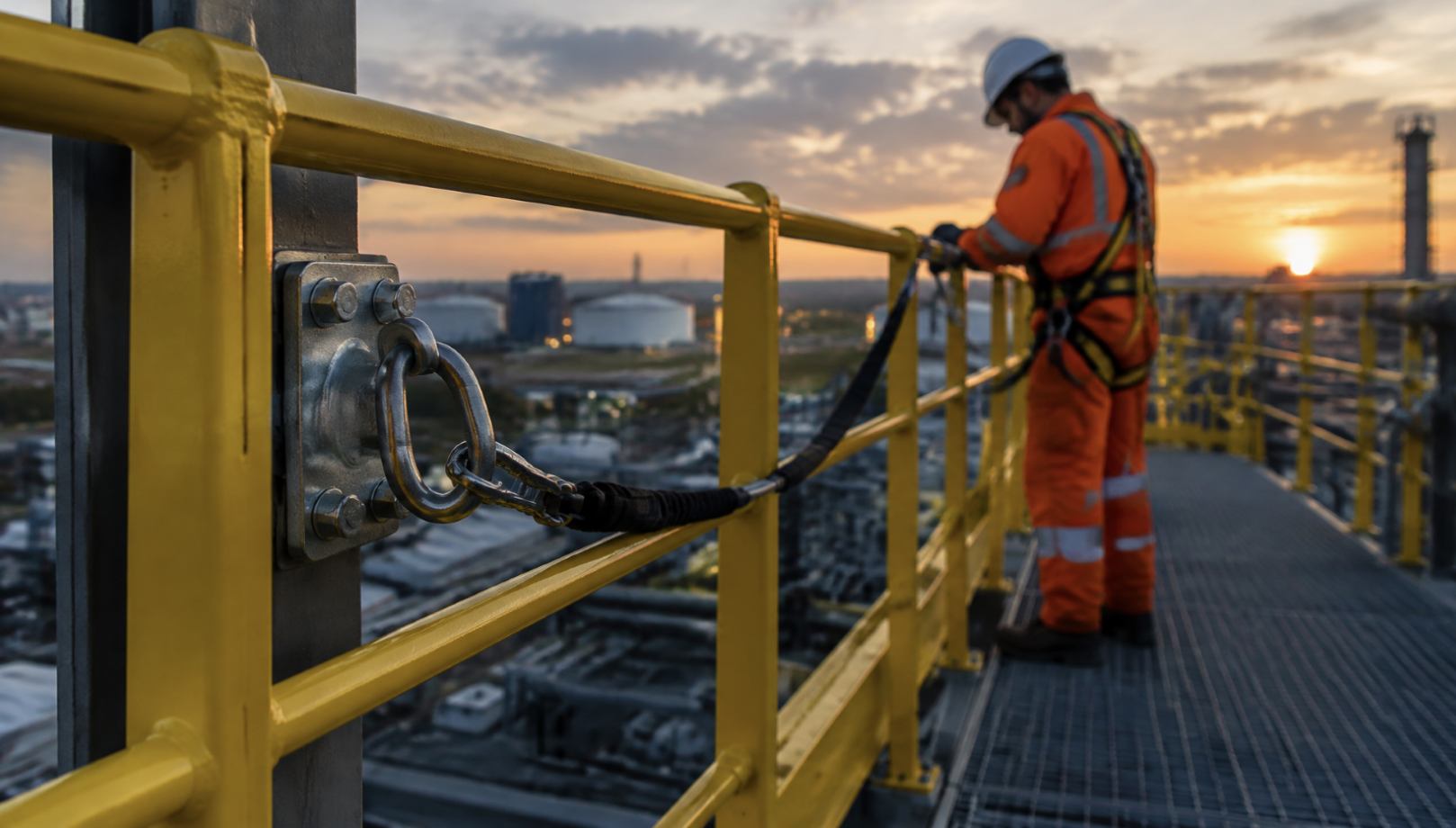
Take working at height. Edge protection that is installed and intact is a control. A fall arrest system anchored to a rated point is a control. The work at height permit, the harness inspection and the training are support activities. They're how you make sure the edge protection and the anchor are right, but none of them physically stops a person going over the edge.
When support activities are listed as critical controls, the list gets long and verification turns into checking paperwork. Separating the two usually leaves you with fewer, clearer controls and a much better idea of where to focus.
How to tell if a control is critical
ICMM suggests asking a few simple questions about each control [1]:
- Is it the only control, or is it backed up by another control if the first one fails?
- Would its absence or failure significantly increase the risk, despite the other controls in place?
- Does it address more than one cause, or mitigate more than one consequence?
The guide also asks whether a control's performance can be "specified, observable, measurable and auditable" [1]. If you can't describe what good looks like and check it in the field, it isn't working as a control yet.
What makes a Critical Control work in practice
Identifying a critical control is the easy part. Keeping it working is where the real effort goes. Three things make the difference.
A performance standard. ICMM asks "what performance is required of the critical control?" [1]. A good standard says what the control must achieve, how well, and what counts as a failure. "Isolation procedure followed" isn't a standard. "Every worker applies their own lock and the energy source is tested dead before work starts" is.
A named owner. ICMM recommends a critical control owner who is a line manager responsible for operations [1]. Not a role on an org chart, but a person who knows the control is theirs and what's expected of them.
Verification. ICMM defines verification as "the process of checking the extent to which the performance requirements set for a critical control are being met in practice" [1]. That means going out and testing the control, not just confirming it exists.
Common mistakes we see
- Too many critical controls. When everything is critical, verification gets spread so thin that nothing gets checked properly.
- Vague controls. "Training" or "procedure" listed as a control, with no performance standard behind it.
- Ownership gaps. The owner moves roles and nobody tells the person who takes their place.
- Trusting a clean incident record. ICMM warns that "the absence of accidents or incidents must not be taken as evidence that controls are working adequately" [1].
Where to start
- Pick your highest consequence material unwanted event.
- List every control on its bowtie, then separate true controls from support activities.
- Ask the critical control questions above to find the handful that really matter.
- Write a clear performance standard for each one and give it a named owner.
- Go out and verify one this week, in the field, against that standard.
Conclusion
Critical controls are the small number of things standing between your people and the events that could kill them. Getting them right isn't about adding more paperwork. It's about knowing exactly which controls matter, what good looks like for each one, who owns it, and whether it's actually working today.
At Impress Solutions, we help organisations identify their critical controls, set practical performance standards and build verification that works in the real world. If you'd like a hand reviewing the critical controls on your site, get in touch with our team.
References
[1] International Council on Mining and Metals (ICMM), Health and Safety Critical Control Management: Good Practice Guide, 2015. https://alustory.international-aluminium.org//wp-content/uploads/2022/03/guidance_ccm-good-practice.pdf






























































Ready to Save Lives at Work?
With Impress Solutions, you’re not just getting a service, you’re securing peace of mind with a partner you can trust. Book a free consultation today, and let’s map out how we can help you save lives at work.

