
JSA Safety Analysis: A Step-by-Step Guide to Controlling Workplace Hazards

Between 2003 and 2021, 4,306 workers lost their lives in work-related incidents across Australia[7]. As a matter of fact, 82 Australians were killed at work in 2023 alone[7]. These numbers highlight why JSA safety processes are critical for every workplace.
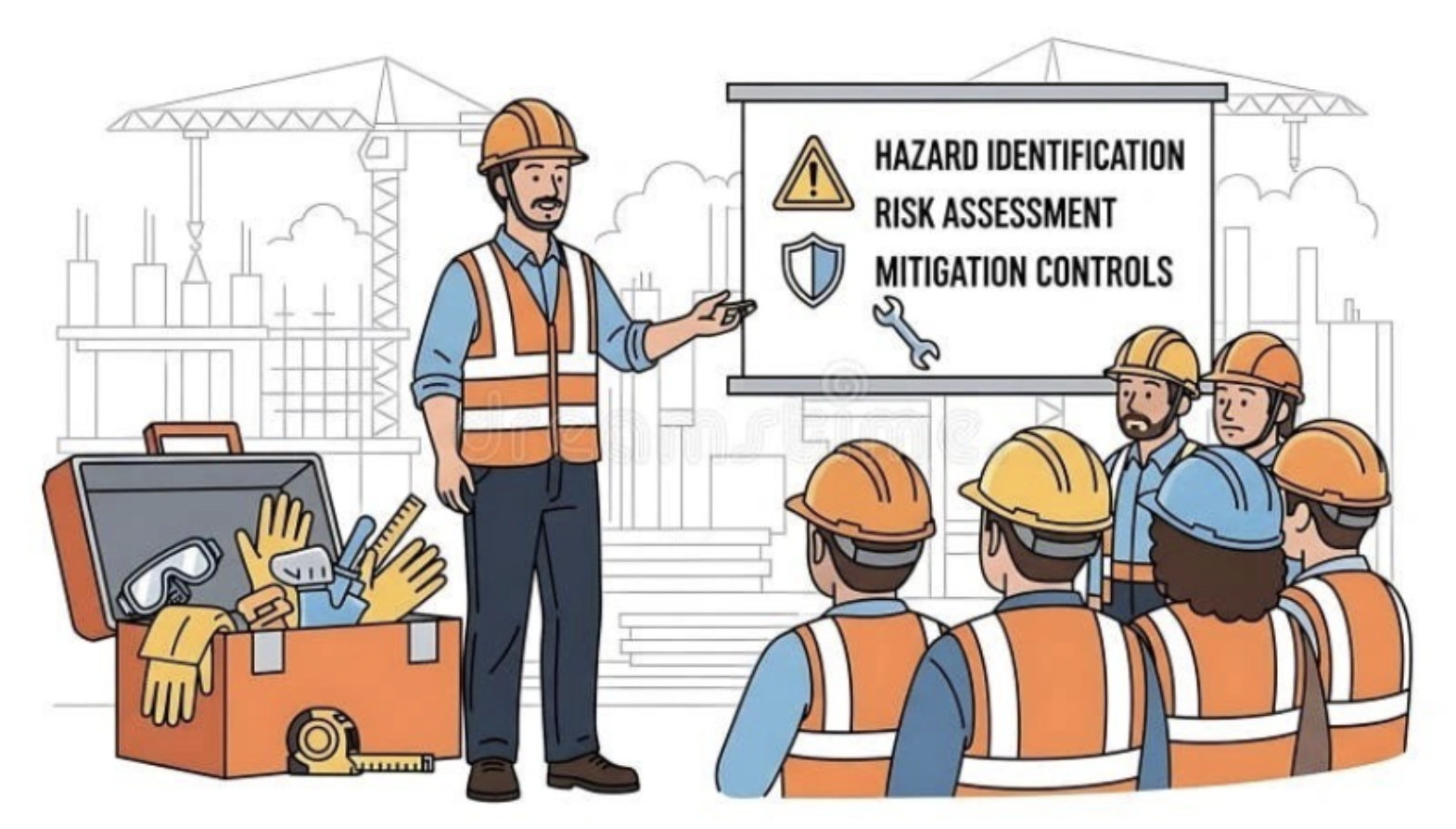
A job safety analysis (JSA) helps you identify and control workplace hazards before they cause harm[8]. You break down each job into tasks, spot potential dangers and implement controls. JSA provides a systematic approach to workplace safety[9].
We'll walk you through what is a JSA in this piece, explain the essential JSA steps and show you how to create an effective JSA job safety analysis template that protects your team and will give compliance.
What Is a Job Safety Analysis (JSA)
A job safety analysis is a systematic procedure that breaks each job into key training sequences, identifies safety elements of each task step, and coaches employees on avoiding potential safety hazards[1]. The technique focuses on job tasks as a way to identify hazards before they occur and analyzes the relationship between the worker, the task and the work environment[10].
You might hear this process called a Job Hazard Analysis or JHA. Both JSA and JHA are the same thing[1][11]. Safety professionals use these terms interchangeably to describe a technique for improving worker safety when completing hazardous tasks[11]. Whatever the term used, the method identifies existing and potential hazards of a task, assesses their risks and prevents losses by recommending control measures[12].
The main goal of jsa safety analysis is preventing workplace injuries and illnesses by implementing safety measures and controls[4]. Organizations that conduct JSAs reduce injuries, improve compliance and strengthen their safety culture[4].
Priority should go to jobs with high injury rates and those with potential to cause severe or disabling injuries even without previous incidents. Tasks where one simple human error could lead to severe accidents need attention, along with new jobs or those with recent process changes and complex jobs requiring written instructions[1][10].
The 4 Steps of JSA: Breaking Down the Process
JSA follows a systematic four-step approach that revolutionizes workplace safety from reactive to proactive[3].
Step 1: Select and Prioritize Jobs for Analysis
Not all jobs just need analysis right away. Start with tasks that have high illness or incident rates[3]. Jobs where simple human error could cause catastrophic consequences just need priority attention[3]. New jobs or processes modified in recent months just need analysis because workers lack experience and hazards may not be evident[3]. Jobs performed infrequently present greater risk since staff members don't anticipate which hazards to expect[3]. Complex jobs that just need detailed written instructions also warrant a full review[3].
Step 2: Break Down the Job into Specific Tasks
Pick a job and break it into a sequence of smaller tasks and steps[3]. Most jobs can be described in less than ten steps[3]. If your sequence grows beyond this, think about dividing the job into two separate analyzes[3]. Steps that are out of order may cause you to miss potential hazards[3].
Step 3: Identify Hazards and Assess Risk for Each Task
Each job task should be reviewed and you should write down existing and potential hazards that arise in each step. You can identify hazards by observing the job, reviewing past incident investigations and talking with experienced workers[3]. A risk matrix together with an assessment of consequences and likelihood helps you assess each hazard[3].
Step 4: Develop and Implement Control Measures
The hierarchy of controls should be applied to address identified hazards[3]. Eliminating the hazard works best[3]. Substitution with less hazardous alternatives becomes necessary if elimination isn't possible. Engineering controls and administrative controls follow, with personal protective equipment as a final resort[3].
Creating an Effective JSA Safety Analysis Template
A structured template captures all the information you need to document the four-step process. A practical JSA job safety analysis template has core sections that turn your analysis into a working document.
The template starts with job information fields: job title, work location, responsible department, analysis date, and the names of people preparing or reviewing the document[2]. This header section establishes accountability and tracking. You must record contributors to the JSA development on the form[5].
Next comes the breakdown of job steps. Each task is listed in logical sequence. You identify corresponding hazards for each step. These cover slips, trips, manual handling risks, falling objects, chemical exposure, electrical shocks and ergonomic strains[2]. The risk controls section follows and lists appropriate measures. These are engineering controls like machine guards, administrative controls such as training and procedures, and personal protective equipment[2].
The final section requires review and authorization. Supervisors or safety officers sign to confirm they have reviewed and accepted the analysis[2]. All team members must sign the JSA to accept the actions needed to implement identified hazard controls[6]. Sign-off must occur before you start the task[5].
Your template becomes stronger when you avoid common mistakes. Overcomplication discourages use. Excluding frontline employees results in incomplete hazard lists[2]. Failure to review after incidents or process changes undermines safety[2]. Treating JSA as a tick-box exercise rather than a living document defeats its purpose[2].
Conclusion
You now have a complete framework to implement JSA safety analysis in your workplace. The four-step process isn't complicated, but your entire team needs commitment and consistency to make it work.
Prioritize high-risk jobs first, break them down systematically, identify hazards honestly and implement controls that work. Note that your JSA is a living document that needs regular updates.
Your team's safety depends on taking action today, not tomorrow.
References
[1] - https://ehs.research.uiowa.edu/occupational/job-safety-analysis-jsa
[4] - https://www.vectorsolutions.com/resources/blogs/a-breakdown-of-the-4-steps-of-a-job-safety-analysis/
[5] - https://policies.une.edu.au/document/view-current.php?id=353
[7] - https://www.enviroessentials.com.au/blog/2023/08/conducting-a-job-safety-analysis/
[8] - https://www.osha.gov/sites/default/files/Job_Hazard_Analysis_Worksheet.pdf
[10] - https://www.osha.gov/sites/default/files/publications/OSHA3071.pdf
[11] - https://www.vectorsolutions.com/resources/blogs/is-there-a-difference-between-a-jsa-and-a-jha/
[12] -https://pmc.ncbi.nlm.nih.gov/articles/PMC10300476/















































.png)











.png)
.png)
.png)
.png)
.png)
.png)
.png)

.png)
.png)
.png)
.png)
.png)
.png)
.png)
.png)
.png)
.png)
.png)
.png)
.png)
.png)


Ready to Save Lives at Work?
With Impress Solutions, you’re not just getting a service, you’re securing peace of mind with a partner you can trust. Book a free consultation today, and let’s map out how we can help you save lives at work.

.png)