
How to Implement Permit to Work Systems: A Step-by-Step Guide for Workplace Safety

Understanding Permit to Work Systems
What is a Permit to Work System
A permit to work system functions as a documented procedure that authorizes certain people to carry out specific work within a specific time frame [1]. The HSE defines it as a formal system stating exactly what work is to be done and when, and which parts are safe [2]. The permit serves as a detailed plan that brings risk assessments to life at the job site, more than just permission [2].
The system outlines the scope of work and identifies potential risks. It specifies the safety precautions that must be followed [2]. Workers sign the permit to show they understand the risks and precautions needed [2]. To cite an instance, a hot work permit might detail requirements such as fire extinguishers nearby, clearing flammable materials from the area, and appointing a fire watcher to monitor the site during and after the task [3].
These workplace permits represent a means of communication between site management, plant supervisors, operators, and those who carry out the work [2]. The decision of whether one is required does not depend on an industry's hazard level but rather on the hazard level of the specific work to be performed [1].
Why is a Permit to Work System Implemented in Workplaces
Organizations implement permit to work systems to prevent accidents and injuries on-site. They ensure all safety hazards are identified and controlled before work begins [2]. The system creates an additional layer of oversight and minimizes the likelihood of accidents due to miscommunication, lack of training, or unsafe practices [4].
PTW systems clearly communicate risks and precautionary measures beyond accident prevention. They help everyone understand the work to be done and prevent misunderstandings that could lead to dangerous situations [2]. They serve as documented evidence showing an organization follows risk assessment and safety procedures, supporting compliance with regulations [2].
A well-laid-out PTW system can streamline operations. It reduces delays associated with starting high-risk tasks [2]. The documentation provides a clear paper trail showing exactly what was authorized, who was involved, and what precautions were supposed to be in place [2]. This accountability is a great way to get support during audits or investigations.
Core Components of an Effective PTW System
Establishing an effective PTW system requires incorporating several key elements:
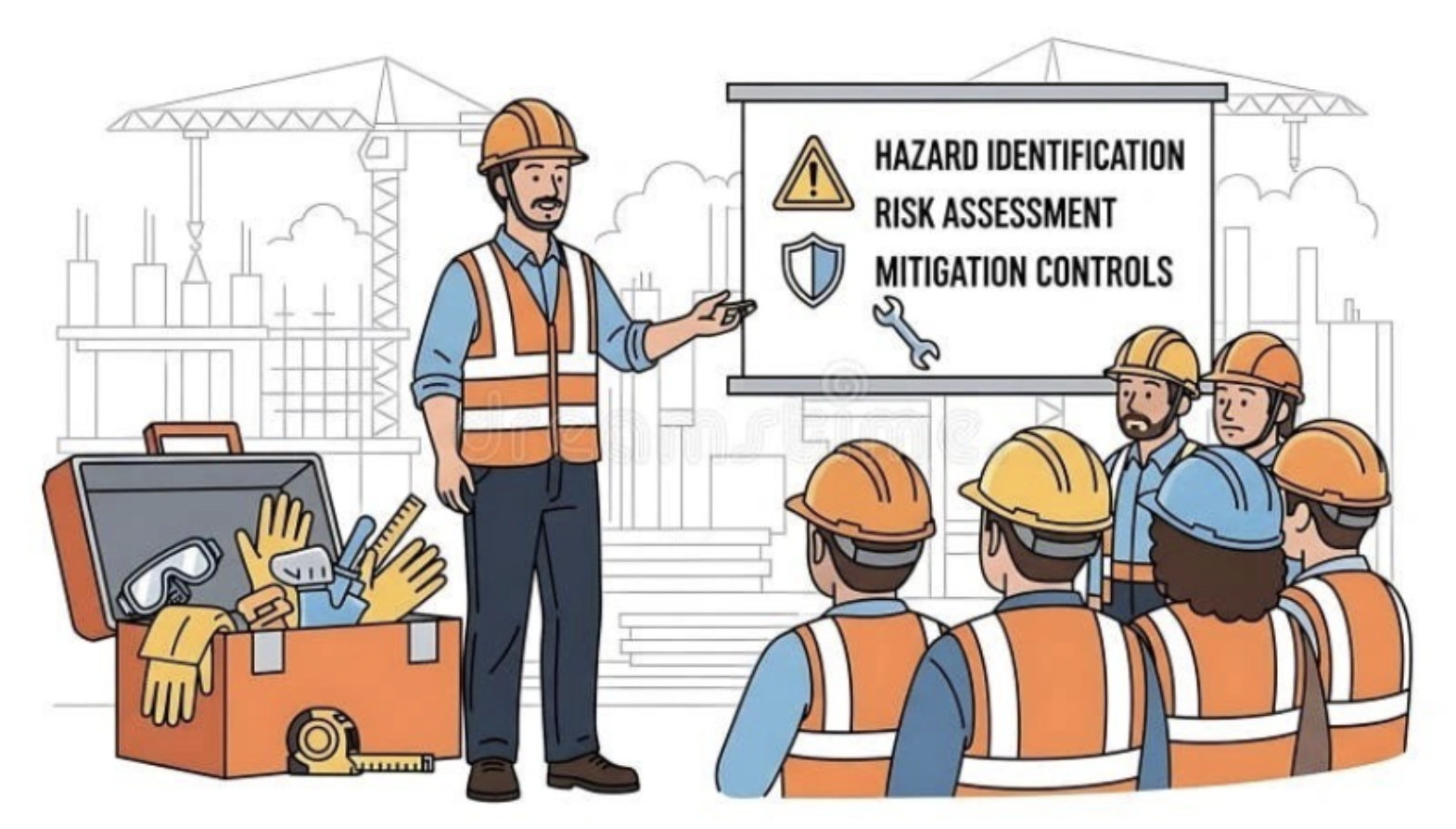
- Hazard identification defines the hazardous areas and activities where work will be performed [2]
- Risk assessment determines the level of risk associated with identified hazards and establishes control measures needed [2]
- Scope of work outlines the purpose, location, and duration of the work to be carried out [2]
- Roles and responsibilities assign specific functions for individuals involved in the PTW process [2]
- Authorization process gets approval from designated personnel before starting work [2]
- Communication protocol relays emergency procedures to follow in case of incidents, including contact information for emergency services [2]
- Monitoring and compliance implements processes to ensure adherence to permit conditions throughout work duration, such as regular supervisor checks [2]
- Documentation keeps written or digital records of permits issued, including details about work performed and confirmation that the site was restored to a safe condition [2]
- Closure of permit ensures permits are closed after work completion or suspension formally [2]
A responsible person should assess the work and check safety at each stage [2]. The permit must contain all relevant information, be correct, and presented in a suitable format [2].
Types of Workplace Permits
Different hazardous activities just need specialized workplace permits. Each one addresses specific risks and control measures. Organizations can match authorization requirements to the actual work when they understand these permit categories.
Hot Work Permits
Hot work has welding, thermal cutting, oxygen cutting, heating, grinding and other heat or spark-producing operations. A hot work permit system with a detailed review identifies all possible hazards associated with the proposed activity before you carry out any hot work on site [5].
Each permit remains valid for a maximum of one shift [6]. Fire represents the main concern. Heat, sparks, molten metal or direct flame contact cause it. A spotter monitors the hot work area for 15 minutes after low and moderate-risk work finishes. This extends to 30 minutes for high-risk activities [6]. The hot work permit addresses housekeeping, site inspection and handling of hot products after the activity completes [5].
Confined Space Entry Permits
Workers must not enter a confined space without a confined space entry permit. This applies even when they conduct the original hazard identification or risk assessment [2]. A competent person must complete the permit. It provides a formal written check and ensures all elements of a safe system of work are in place before anyone enters [2].
The permit details hazard control measures implemented before, during and after entry. These measures have ventilation, atmospheric monitoring, lockout/tagout procedures and PPE requirements [2]. You must establish a detailed rescue plan before entering. This plan involves onsite rescue teams, emergency response equipment and communication protocols with external emergency services [2].
Electrical Work and Isolation Permits
Isolation procedures keep plant and components from being set in motion. They also prevent the release of stored energy like electricity, heat, steam and fluids [2]. Energy sources have electricity, hydraulic pressure, compressed air or gas, gravity, kinetic spring tension and moving parts [2].
The isolation process requires you to shut down machinery and identify all energy sources and hazards. You must isolate all energy sources, control stored energy and lock out all isolation points using padlocks and danger tags [2]. Every person working on isolated equipment should fit their own lock and danger tag [2]. Testing confirms the isolation's effectiveness. You attempt to reactivate the plant without exposing anyone to risk [2].
Working at Heights Permits
Construction work with a risk of falling more than 2 meters qualifies as high-risk construction work. It requires a Safe Work Method Statement [7]. You manage risks by eliminating or minimizing fall hazards through a hierarchy of controls. These controls have fall prevention devices like barriers, scaffolding and elevating platforms. Work positioning systems use industrial rope access. Fall arrest systems have safety nets and catch platforms [7].
Cold Work Permits
Cold work permits authorize activities that don't involve open flames or heat-generating sources. These activities still present a risk of injury, property damage or environmental harm [8]. A cold work permit system can reduce accidents, injuries and fatalities by up to 50% in the oil and gas industry [8].
Activities that just need cold work permits have energized electrical work, movement of heavy equipment, working from heights and confined space entry. Jobs involving toxic or corrosive substances, excavation and pressure testing of vessels or pipelines also require these permits [8].
Excavation Permits
An excavation permit confirms all pre-work safety requirements have been satisfied. This has Before You Dig Australia enquiry completion, overhead and underground services identification, geotechnical requirements confirmation and emergency rescue procedures [9]. Excavation work in trenches at least 1.5 meters deep requires you to secure the work area from unauthorized access [10]. High-risk construction work has excavation in or near shafts or trenches exceeding 1.5 meters depth [10].
Step-by-Step Implementation Process
Rolling out permit to work systems across your workplace just needs a structured approach that builds safety controls into every layer of your operations. Break down the implementation into clear steps and nothing gets overlooked.
Step 1: Conduct Original Risk Assessment
The pre-job risk assessment drives the entire permit system. This assessment identifies specific hazards of each task and determines exactly what controls and conditions need listing on the permit. The permit becomes an empty form without a solid risk assessment. The work permit issuer should think about material hazards, high pressure, temperature extremes, fumes, electrical hazards, mechanical energy, hazardous areas, height, radioactive substances, restricted space or vision, and any other hazard applying to the particular task, location, or time of day before issuing any permit.
Step 2: Define Roles and Responsibilities
Ambiguity on high-risk job sites guides to serious mistakes. Define these key roles: the permit issuer (a site manager or supervisor) confirms risk assessments are complete and safety precautions are in place before signing off. The permit receiver or holder guides the work crew and makes sure their team follows every condition. Affected workers must understand the permit and follow its rules. They have authority to stop the job if conditions change.
Step 3: Develop Permit Procedures and Templates
Write procedures in plain language that everyone on site understands, whatever their background. Tasks requiring permits should be documented in work instructions with details for specific locations, departments, and time of day. Prepare job safety analysis or equivalent for hazardous activities where required. The permit should specify precautions and hazard control measures with physical isolation, electrical isolation, decontamination, and required PPE.
Step 4: Establish Permit to Work Training Programs
Persons who issue permits should be trained in hazard identification, assessment, and control. Records of such training and competency should be managed to keep. Training has theory and practical components, followed by a buddy program where trainees issue permits under guidance of authorized issuers. Refresher training should occur every three years to re-authorize.
Step 5: Set Up Authorization and Approval Workflows
Permits progress through distinct workflow stages: draft, open, requested, authorized, expired, and canceled. The system sends email notifications at key workflow points when permits are submitted to authorize, approved, or canceled. Multi-level approval processes give accountability before work begins.
Step 6: Create Documentation and Record-Keeping Systems
The issuer should register all permits in the permit register. Responsible managers should check the register at the end of each work period and resolve each permit not closed. Safety case documents should be kept for five years after acceptance date. Permits and records should be kept for a period of 2 years.
Step 7: Launch and Monitor the System
The duty holder remains responsible to audit the system and train staff on operations. Audits unearth instances of lower-level non-compliance that foreshadow major incidents. Make arrangements to manage non-compliance, such as permit overload at shift beginnings. Plan work to smooth out permit distribution or provide more authorizers at busy times.
Selecting the Right Work Permit Issuer
Legislation requires that a competent person must issue the work permit [5]. The work permit issuer needs to understand the permit system and know each permit's limitations. They make decisions regarding the need for and correct use of each permit [6].
Required Qualifications and Competencies
Personnel responsible for issuing workplace permits must possess well-developed skills in reading and communication [6]. Specific competencies include identifying work permits required from job scope and identifying hazards and risks. They must hold required specialized knowledge and use the organization's risk matrix to estimate potential risk. Other competencies include entering information into appropriate permits and applying risk control procedures. Personnel monitor risk controls and review their effectiveness. They monitor work for compliance, receive end-of-day reports, and communicate worksite and process status to relevant personnel [6].
Training Requirements for Permit Issuers
Nationally recognized permit to work training covers both theoretical and practical aspects for those who issue or authorize work permits [11]. The course takes around 4 hours [12]. Participants receive a Statement of Attainment for MSMPER300 (Issue Work Permits) and MSMWHS201 (Conduct hazard analysis) after successful completion [5]. MSMPER300 Issue work permits requires MSMWHS201 Conduct hazard analysis as a prerequisite [11]. Both theory and practical assessments occur throughout the course [6].
Authorization Process
The work permit issuer must demonstrate competency in the permit to work system before receiving authorization [13]. An induction questionnaire checks competency, and the organization provides follow-up training as identified and required [13].
Ongoing Assessment and Recertification
Attendees bring their own permit to work system for assessment on the day where possible [6]. Organizations offer ongoing support services to course participants. These include student drop-in contact days on a monthly basis [6].
Transitioning to Electronic Permit to Work Systems
Paper-based permits cannot verify whether a user stands physically at the worksite or if a gas detector reading reflects current conditions [2]. Trust rather than verification forms the basis here, leaving room for procedural errors where forms get completed without the physical checks needed [2]. A paper permit effectively leaves the immediate view of central management once signed and taken to the field. This creates a blind spot regarding simultaneous operations [2].
Limitations of Paper-Based Permits
Paper forms record site conditions at the specific moment of issuance but cannot update themselves [2]. The paper form remains silent if environmental conditions change, such as wind direction carrying hazardous vapors [2]. Digital systems integrate with IoT sensors or weather data to assess risk and alert users to changing parameters continuously [2].
Contractors must physically travel between worksites, permit offices, and supervisor locations to secure signatures under traditional workflows [2]. Much productivity gets lost when a site issues 10 permits daily and each involves 45 minutes of transit and waiting time [2]. Teams may bypass protocols to meet production deadlines because of these administrative bottlenecks [2].
Benefits of Digital PTW Platforms
Organizations that implement electronic permit to work systems report 40-60% reduction in PTW-related incidents [14], 70% reduction in permit processing time from hours to minutes [14], and 90% improvement in permit compliance with all fields completed and approvals obtained [14].
Digital platforms provide 100% audit trails for regulatory compliance and investigations [14]. An HSE Director can digitally revoke all active permits and send stop work notifications to all connected devices on site instantly if an incident occurs [2].
Key Features to Look for in Electronic Systems
Conditional logic prevents users from advancing until they meet specific criteria [2]. A user cannot submit a hot work permit request until the gas test field is populated with data within safe limits [2]. The platform can require time-stamped photos to verify that a worksite is clear of debris. Fire watch personnel scan QR codes or NFC tags at locations to prove physical presence [2].
Automatic conflict detection identifies spatial conflicts where two incompatible permits exist in the same area and system conflicts where work affects interacting systems. It also catches temporal conflicts with overlapping time windows and resource conflicts where multiple permits require the same isolation points [14].
Implementation Best Practices
Successful implementation follows structured methodology phases. Change management should start early and continue throughout all phases [7]. The system should work in offline mode for areas with weak or no signal [15]. Better acceptance comes from early participation with representative end-users [7]. Detailed training customized for different user groups such as safety officers, permit issuers, supervisors and field workers helps [7].
Conclusion
You now have a complete roadmap to implement permit to work systems that genuinely protect your workforce. The data speaks for itself: organizations with rigorous PTW systems see 30% fewer work-related injuries, and digital platforms can reduce PTW-related incidents by up to 60%.
Begin with your risk assessment and define clear roles. Train your permit issuers well and establish solid documentation practices. Consistency remains key, whether you're beginning with paper-based permits or transitioning to electronic systems.
The most sophisticated permit system means nothing without proper execution. Focus on building a safety culture where permits represent genuine protection, not just paperwork. Your workers will thank you for it.
References
[1] - https://www.evotix.com/resources/blog/what-is-a-permit-to-work-system
[2] - https://www.tekmon.com/resources/blog/digital-permit-to-work-vs-paper
[3] - https://www.work-wallet.com/blog/how-a-permit-to-work-system-helps-control-site-safety/
[4] - https://www.compliancequest.com/blog/ptw-permit-to-work-systems-importance-benefits/
[5] - https://www.worksafeconnect.com/courses/issue-work-permits
[6] - https://www.dtetrainingsafety.com.au/training/permit-issuer/
[7] - https://www.intellipermit.com/blog/permit-to-work-overcome-challenges/
[8] - https://www.certaintysoftware.com/cold-work-permit/
[9] - https://hsedirect.com.au/excavation-standard-and-procedure/
[11] - https://link-resources.com.au/courses/issue-work-permits-permit-authority/
[12] - https://safetyaustraliatraining.com.au/permit-to-work-training/
[14] - https://qhsetech.com/blog/permit-to-work-digital-transformation
[15] -https://www.novade.net/en/why-you-need-an-eptw-system/













































.png)











.png)
.png)
.png)
.png)
.png)
.png)
.png)

.png)
.png)
.png)
.png)
.png)
.png)
.png)
.png)
.png)
.png)
.png)
.png)
.png)
.png)
.png)
.png)


Ready to Save Lives at Work?
With Impress Solutions, you’re not just getting a service, you’re securing peace of mind with a partner you can trust. Book a free consultation today, and let’s map out how we can help you save lives at work.

.png)