What Are Positive Performance Indicators: Essential Safety Metrics for High-Hazard Workplaces

A worker died every 99 minutes from a work-related injury in the United States in 2023. Understanding what positive performance indicators are is crucial to prevent such tragedies. Safety metrics serve as indicators that measure and assess an organization's safety performance. Organizations that track both lagging and leading indicators using technology experience a 62% reduction in Total Recordable Incident Rate (TRIR). In this piece, we'll explore leading vs lagging indicators and what lagging indicators are with their limitations. We'll also examine examples of leading indicators, lagging indicators and positive performance indicators that can reshape your safety management approach.
Understanding Positive Performance Indicators in Safety Management
What Are Positive Performance Indicators
Positive Performance Indicators (PPIs) measure activities undertaken to improve workplace health and safety performance [1]. These metrics focus on the positive steps an organization takes to prevent incidents rather than count what went wrong. PPIs are process-oriented measurements that guide actions to improve future performance within an organization [2].
PPIs function as measurements of successful WHS practice [3]. Examples include the number of safety audits conducted, percentage of sub-standard conditions identified and corrected, and percentage of employees with adequate OHS training [1]. These indicators provide objective measurements of total operational performance and are the foundations of continual improvement in OHS risk control mechanisms [2].
Lagging indicators used alone fail to provide reliable or accurate measurement of occupational health and safety performance [2]. A wider range of measurement is needed. Traditional outcome-based metrics associate poorly with both the human and financial consequences of work-related injury and illness [1]. PPIs have been promoted since the 1990s as preferable measures [1].
How Leading Indicators Differ from Lagging Indicators
Leading indicators are proactive, preventive and predictive measures that shed light on the effectiveness of safety and health activities [4]. OSHA defines them as measures that help detect and address hazards before an incident occurs [5]. These process-oriented metrics, such as rate of implementation or conformance with policies and procedures, are capable of predicting performance [4].
Lagging indicators are outcome-oriented metrics that measure past performance [4]. They record what has happened and track incident statistics such as injury frequency and severity, lost time injuries, and workers' compensation costs [6]. Lagging indicators cannot guide real-time safety decisions, though they remain useful for trend analysis and standards [5].
Organizations tracking leading indicators experience 59% reduction in TRIR and 60% reduction in DART rates [5]. The Campbell Institute reports an average incident reduction rate of 77% among organizations with leading indicator programs that are several years old [5]. These statistics show the predictive power of proactive measurement.
A good safety and health program uses leading indicators to guide change and lagging indicators to measure effectiveness [4]. Both types have strengths and weaknesses. Lagging indicators are associated with unfavorable outcomes and have the power to halt the system. Leading indicators are weaker and not detectable unless sought after [4].
Why Proactive Safety Metrics Matter for High-Hazard Workplaces
Leading indicators prevent workplace injuries and illnesses before they occur [4]. They enable intervention prior to incidents and allow organizations to identify hazards and unsafe behaviors in real time [5]. This proactive approach protects employees and limits liability for employers by showing an interest in safety and well-being [7].
Organizations with mature WHS cultures adopt a proactive approach to their system of management. They seek to identify and manage risks before they materialize [8]. The increased OHS activity improves health and safety culture that is encouraged by management and supported by the workforce [2].
A notable trend emerged in 2025 when 68% of issuers began linking executive compensation to near-miss reporting volumes [5]. This reflects growing recognition that leading indicator tracking guides organizational safety performance. Leading indicators reduce costs associated with incidents, including workers' compensation claims, medical expenses, OSHA penalties, lost productivity, replacement worker training, equipment damage and management time spent on incident investigation [5].
Leading vs Lagging Indicators: Key Differences and Applications
What Are Lagging Indicators and Their Limitations
Lagging indicators are outcome-oriented metrics that measure events which have already occurred [4]. They reflect the end result of past safety performance and track incident statistics such as injury frequency and severity, lost time injuries, incidents including property damage and environmental spills, near-misses, and workers' compensation costs [4]. These metrics assess the overall past performance of workplace health and safety programs [4].
The usefulness of lagging indicators faces several limitations. They do not reveal whether an organization will work at preventing incidents [4]. A gap exists between the event and when outcomes are measured. This results in reactive rather than proactive measures [4]. Low rates of lost time injuries over six months may mislead employers into believing no safety issues exist, despite a doubling of near-miss incidents during that same period [4]. Many workplaces have too few injuries to distinguish real trends from random occurrences. Not all incidents or injuries are reported, which is another possibility [4].
Examples of Leading Indicators in Industrial Settings
Leading indicators function as early warning signs and help organizations identify and alleviate possible dangers before they result in incidents [7]. Industrial operations track several key leading indicators:
- Frequency of safety training sessions and employee participation in safety programs [7]
- Number of safety audits conducted and frequency of ergonomic assessments [4]
- Participation in training programs and orientation, and percentage of managers with occupational health and safety training [4]
- Frequency of health and safety meetings [4]
- Regular inspections or audits and measuring employee participation in safety training programs [4]
- Monitoring near-miss reports and assessing how well hazard identification systems work [4]
- Tracking maintenance schedules for equipment used in high-risk tasks [4]
Measurement should focus on effect rather than mere activity when using leading indicators [4]. Organizations measure how many people participated in the meeting and met key learning objectives instead of counting safety meetings [4].
Examples of Lagging Indicators and When to Use Them
Traditional lagging indicators include OSHA total case incident rate (TCIR), days away, restricted work or transferred (DART) injury rate, and the experience modification rating (EMR) [7]. Lagging indicators provide a retrospective view of safety incidents and help organizations identify trends and assess how well their safety programs work [7].
Lagging indicators serve specific purposes despite their reactive nature. Organizations can use them during risk assessments to assign probability and severity of occurrence from past events and incidents [4]. They also use them to assess how well controls work by monitoring trends after workplace modifications [4]. Lagging indicators help organizations understand historical performance and identify serious outcome trends. They allow comparison of sites or business units, satisfy reporting requirements, and track the cost of safety failure [9].
The Balanced Approach: Combining Both Indicator Types
OSHA's Recommended Practices for Safety and Health Programs emphasize using both lagging and leading indicators for complete risk management [10]. Combining these indicator types provides a complete view of an organization's safety performance [7]. This integration allows companies to learn from past incidents and address possible dangers at the same time [7].
Organizations should implement a balanced approach by incorporating both types into their safety management system [7]. Safety metrics must include past performance data such as TCIR, DART, and EMR alongside predictive measures like frequency of safety training, near-miss reports, and safety audits [7]. Developing a tracking system that records and analyzes both indicator types allows for regular review to identify trends and areas needing improvement [7]. Leading indicators dictate the action plan while lagging indicators measure how well that plan works in achieving desired workplace safety outcomes [11].
Essential Positive Performance Indicators Examples for High-Hazard Operations
Safety Training Completion and Competency Rates
Organizations track the percentage of workers receiving refresher training as a foundational positive performance indicator. Good leading indicators follow SMART principles: Specific, Measurable, Accountable, Reasonable, and Timely [7]. A common goal sets 100% worker completion of refresher training by the end of each quarter [7]. Tracking completion rates expresses potential knowledge gaps and areas needing improvement [10]. To cite an instance, low completion rates in certain training modules indicate a need for additional resources or emphasis on those areas [10]. Training effectiveness extends beyond mere attendance and measures assessment scores and behavioral changes post-training [4].
Safety Audit and Inspection Frequency
Regular audits and inspections, among tracking the resolution of findings, indicate the effectiveness of safety protocols and commitment to continuous improvement [10]. Organizations measure KPIs relating to opportunities identified for improvement or metrics such as average safety inspection conformance [8]. The frequency of inspecting and clearing hazardous areas serves as a direct leading indicator [7]. Tracking how audit findings get addressed demonstrates proactive safety management in the same way.
Near-Miss Reporting Volume and Response Time
Healthy safety programs manage to keep 5-10 near-misses per recordable injury [4]. Research shows that for every injury reported, there are between 10 and 100 near-miss incidents associated with it [12]. Organizations monitoring near-miss reporting frequency as a leading indicator can identify recurring hazards early and implement corrective actions [10]. Keep in mind that corrective action time matters by a lot. Average days from hazard identification to fix completion determines program effectiveness [4]. Overdue backlogs kill reporting culture [4]. Organizations with near-miss investigation programs that are years old experience measurable improvements in safety performance, as the Campbell Institute research demonstrates a 77% reduction in incident rates [4].
PPE Compliance and Equipment Maintenance Tracking
PPE compliance rates measure the percentage of workers observed wearing required PPE correctly [4]. Organizations track compliance by type and crew to identify patterns [4]. Equipment maintenance tracking involves the frequency with which preventive maintenance tasks are initiated and completed on schedule [7]. Properly maintained equipment lowers the risk of workplace accidents and will give a safer environment for employees [13].
Management Safety Engagement and Field Interactions
Employees supervised by highly engaged managers are 59% more likely to be engaged than those supervised by disengaged managers [14]. Organizations measure the percentage of managers and supervisors attending mandatory safety and health training [7]. Safety interactions demonstrate leadership commitment, improve hazard identification, and recognize positive behaviors [15].
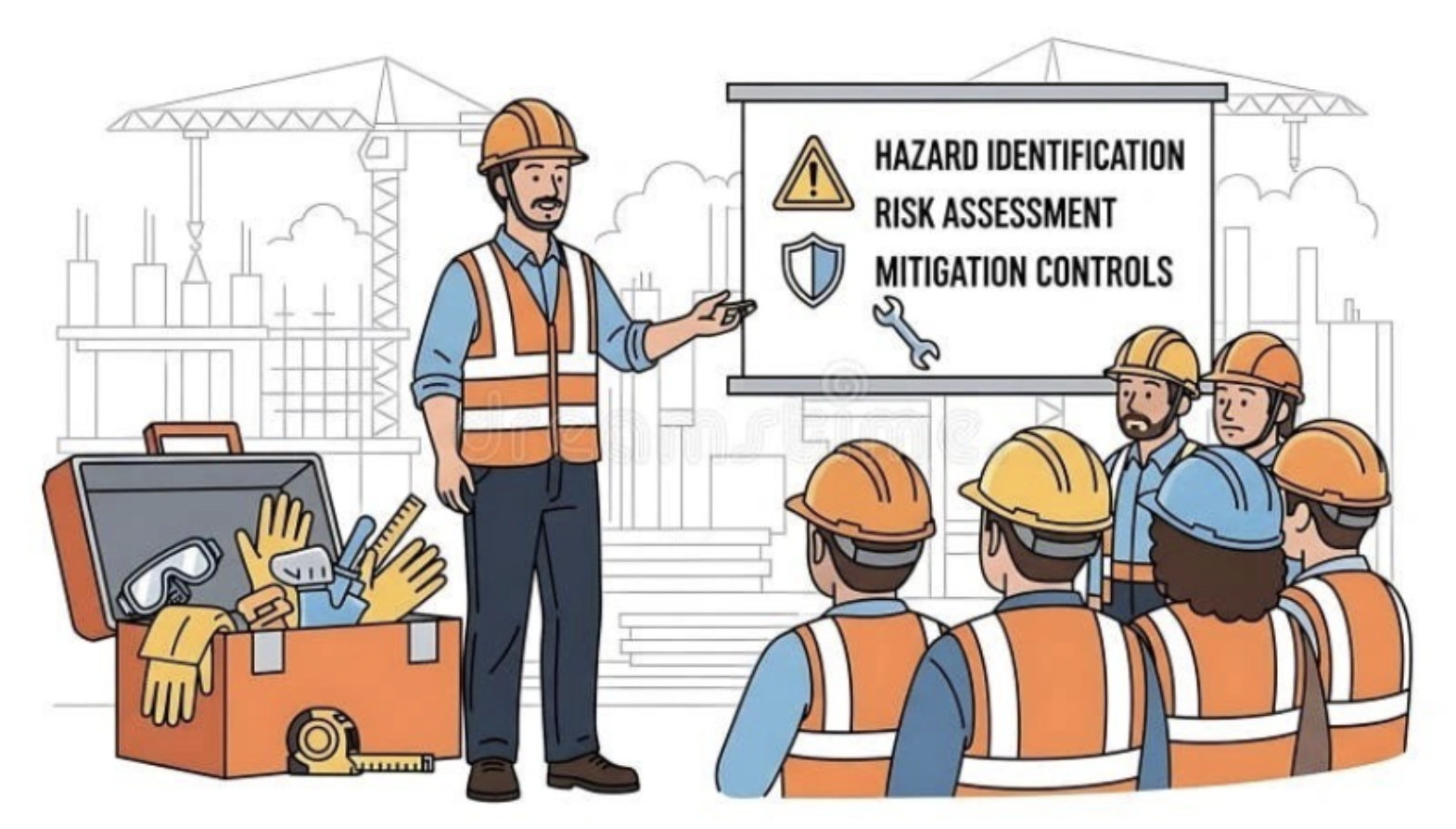
Hazard Identification and Risk Assessment Activities
Workers should be involved in hazard identification, risk assessment, and risk control processes [16]. Organizations conduct workplace hazard identification at various times: when hazards are identified, when workplace changes occur, when responding to incidents, or at regularly scheduled intervals [16]. The frequency of hazard identification activities serves as a strong leading indicator [7].
Data Collection Methods for Leading Safety Indicators
Setting SMART Targets for Each Leading Indicator
Good leading indicators follow SMART principles: Specific, Measurable, Accountable, Reasonable, and Timely [7]. Each criterion shapes how you track progress. Specific indicators provide clear details about the action taken to minimize risk from a hazard or improve a program area [7]. Measurable indicators present data as numbers, rates, or percentages that allow trend evaluation over time [7].
Tracking worker attendance at monthly safety meetings requires setting a realistic goal. A 97% attendance rate is achievable because it accounts for workers who miss work on the scheduled meeting day [7]. A 100% goal is unreasonable since some workers will be absent [7]. The Accountable criterion makes sure your indicator tracks items relevant to your goal [7]. Timely tracking means monitoring your indicator often enough to spot meaningful trends within your desired timeframe [7]. Monthly tracking of meeting attendance allows identification of trends before year-end. Tracking only twice yearly prevents seeing meaningful patterns until the following year [7].
Manual vs Technology-Enabled Tracking Systems
Manual compliance management remains time-consuming and expensive. It is nowhere near as effective as automated systems [17]. Traditional methods require manpower to monitor and record data [9]. Human error compromises data integrity through incorrect readings, transcription errors, or data omission [9].
Safety reporting software offers platforms for capturing significant data with accuracy [18]. Automated data loggers record information without biases or mistakes associated with human fatigue [9]. Workers can submit reports from phones with photos, location tags, and voice-to-text capability [19]. Digital forms make sure all required fields are completed, which reduces errors and incomplete submissions [19].
Creating Effective Safety Dashboards and Reporting Tools
One person should coordinate reporting performance data. This person is responsible for collecting information, designing reports, and flagging areas with deviations from set tolerances [20]. Senior management prefer a single-sheet summary showing deviations from targets and trends [20].
Color-coded traffic light systems indicate whether targets have been met (green), show slight but tolerable deviation (yellow), or require attention due to large deviation (red) [20]. The reporting template should include a section where areas of concern can be listed in one-line explanations for managers [20]. Dashboard design processes rarely use informatics or human factors principles that make sure content and navigation assist task completion and decision making [21].
Implementing Positive Performance Indicators in Your Safety Management System
Worker Participation in Indicator Development and Selection
Worker participation remains vital to any successful safety and health program. Workers possess unique insight into job requirements and risks. They understand how these hazards can be controlled. Meaningful participation means workers are part of establishing, operating, reviewing, and improving the safety program. Organizations benefit when workers help develop programs and set goals. They report hazards, analyze job hazards, and define safe work practices. Workers conduct inspections, develop safety procedures, participate in investigations, and review program performance. Employee safety committees provide formal processes for involvement. This allows workers and management to cooperate toward improving safety and reducing hazards.
Setting Tolerance Levels and Review Frequencies
A tolerance should be set for each leading indicator. This represents the point at which deviation in performance gets flagged for senior management attention. Management teams set tolerances rather than those responsible for activities. This enables intervention when performance deviates beyond acceptable levels. Workshops with process owners, technology teams, and relevant stakeholders help establish original tolerance levels. Performance monitoring systems should document how indicators were identified and the reasoning behind each. They should also capture expected results, data collection methods, and reporting requirements.
Linking Leading Indicators to Safety Critical Elements
Process safety performance indicators should derive from rigorous processes that identify key major accident hazards. Organizations use accident trajectory analysis to determine likely causes and associated control measures. Indicators then link to causes most likely to occur and tied to serious consequences. Organizations should think over developing both leading and lagging indicators for barriers of particular relevance. Indicators should be part of site safety management systems. They are used to monitor performance and identify improvement opportunities specifically.
Turning Data into Corrective Actions and Continuous Improvement
Corrective actions address gaps in performance, compliance, or process effectiveness. They do this by identifying and correcting root causes to prevent recurrence. Setting indicators will not improve performance unless every deviation from intended outcomes gets followed up. The same applies to failure of critical risk control system parts. Organizations should establish clear corrective action procedures. These define how issues get reported, who reviews them, who assigns correction responsibility, and how completion gets verified. Tracking actions to completion prevents starting initiatives that never finish. After implementing corrective actions, confirm they solved problems. This prevents declaring issues resolved when underlying problems persist.
Conclusion
I encourage you to implement these positive performance indicators in your workplace to change safety outcomes. This piece explored how leading indicators serve as proactive measures that predict and prevent incidents. Lagging indicators help review past performance. Organizations tracking both types experience reductions in injury rates that matter most, especially when they measure training completion, audit frequency, near-miss reporting and management involvement. Worker involvement, SMART targets and technology-enabled tracking systems are necessary for implementation to succeed. The balanced approach we covered provides the framework you need to protect employees and build a stronger safety culture.
References
[1] - https://www.ohsrep.org.au/measure_health_and_safety_performance
[3] - https://www.easyhr.edu.au/blog/journal/positive-performance-indicators
[4] - https://etraintoday.com/blog/safety-metrics-leading-and-lagging-indicators-and-why-you-need-both/
[5] - https://www.voxelai.com/industry-insights/safety-performance-metrics-statistics
[6] - https://www.ccohs.ca/oshanswers/hsprograms/leading-and-lagging-indicators.html
[7] - https://www.osha.gov/sites/default/files/publications/OSHA_LEADING_INDICATORS.pdf
[10] - https://www.cority.com/blog/how-to-use-leading-indicatiors-to-enhance-safety-in-the-workplace/
[12] - https://pmc.ncbi.nlm.nih.gov/articles/PMC7458492/
[13] - https://www.compliancequest.com/equipment-management/equipment-maintenance-software/
[14] - https://www.lisam.com/news/safety-engagement-how-to-engage-employees-with-safety/
[15] - https://ljmgroup.com.au/safety-interactions/
[19] - https://www.sitesherpa.co/blog/incident-reporting-software-australia










































.png)








.png)
.png)
.png)
.png)
.png)
.png)
.png)

.png)
.png)
.png)
.png)
.png)
.png)
.png)
.png)
.png)
.png)
.png)
.png)
.png)
.png)


Ready to Save Lives at Work?
With Impress Solutions, you’re not just getting a service, you’re securing peace of mind with a partner you can trust. Book a free consultation today, and let’s map out how we can help you save lives at work.

.png)