Risk Assessment Matrix: How to Build and Use One for Better Risk Control

What Is a Risk Assessment Matrix and How Does It Work
A risk assessment matrix is a visual grid that assesses potential threats by plotting two factors: the likelihood of an event occurring against the severity of its consequences [1]. This tool transforms subjective risk analysis into a systematic process and allows you to categorize threats as low, medium, high, or extreme based on where they fall within the matrix [2].
The matrix operates on two intersecting axes. One axis measures probability (also called likelihood) and ranges from rare occurrences to almost certain events. The other axis assesses impact (or severity) and spans from insignificant effects to catastrophic outcomes [3]. You multiply its probability score by its impact score to generate a risk rating at the time you plot a risk on this grid [3].
Organizations use three common matrix configurations. A 3x3 matrix offers simplicity with nine possible risk ratings and is ideal for straightforward projects or original risk filtering [4]. A 4x4 matrix provides moderate detail with sixteen combinations [3]. The 5x5 matrix has become the standard and delivers twenty-five possible ratings for precise risk differentiation in complex environments [3].
Color coding makes interpretation easier. Green cells indicate acceptable risks that require minimal intervention. Yellow zones flag moderate concerns. Orange represents high-priority threats that demand mitigation strategies, and red cells signal extreme risks that require action right away [3]. This visual approach lets teams identify which hazards need urgent attention and which can be monitored over time.
How to Build a Risk Matrix Template Step-by-Step
Building your risk matrix template begins with identifying potential risks across your organization. Conduct brainstorming sessions with your team and review historical data from past projects. Consult experts who can spot risks based on experience. You can also perform a SWOT analysis to get into internal strengths and weaknesses among external opportunities and threats. Checklists from previous projects help ensure no common hazards slip through.
After you identify risks, define your criteria for likelihood and impact. For likelihood, you might use a qualitative approach with descriptors ranging from "rare" or "almost never" to "frequent" or "almost certain". You can also adopt quantitative scales where ratings correspond to specific probability ranges. Impact scales span from "negligible" or "insignificant" to "catastrophic" or "severe". These scales account for financial loss and operational disruption while addressing reputational damage and safety concerns.
Next, develop your grid with likelihood on one axis and impact on the other. Assess each identified risk by assigning scores for both dimensions. Plot these risks on your matrix. The intersection point reveals the overall risk level. Analyze the distribution to identify patterns and high-priority threats that cluster in red zones. Document mitigation plans for each risk, assign owners and establish response actions. Monitor your matrix and update scores as conditions change to maintain accuracy throughout your project lifecycle.
Risk Matrix Examples and Practical Applications
Practical applications of risk matrices exist in a variety of sectors with distinct needs for review. Think about a manufacturing company that assesses supply chain operations: supplier delays might receive a probability rating of 4 and effect score of 3, while cybersecurity threats could score 5 on both dimensions and place them in the critical action zone. Government departments use similar risk assessment tables for recordkeeping compliance, where failure to produce public records under Right to Information legislation creates medium-level risks that require quarterly senior management review [5].
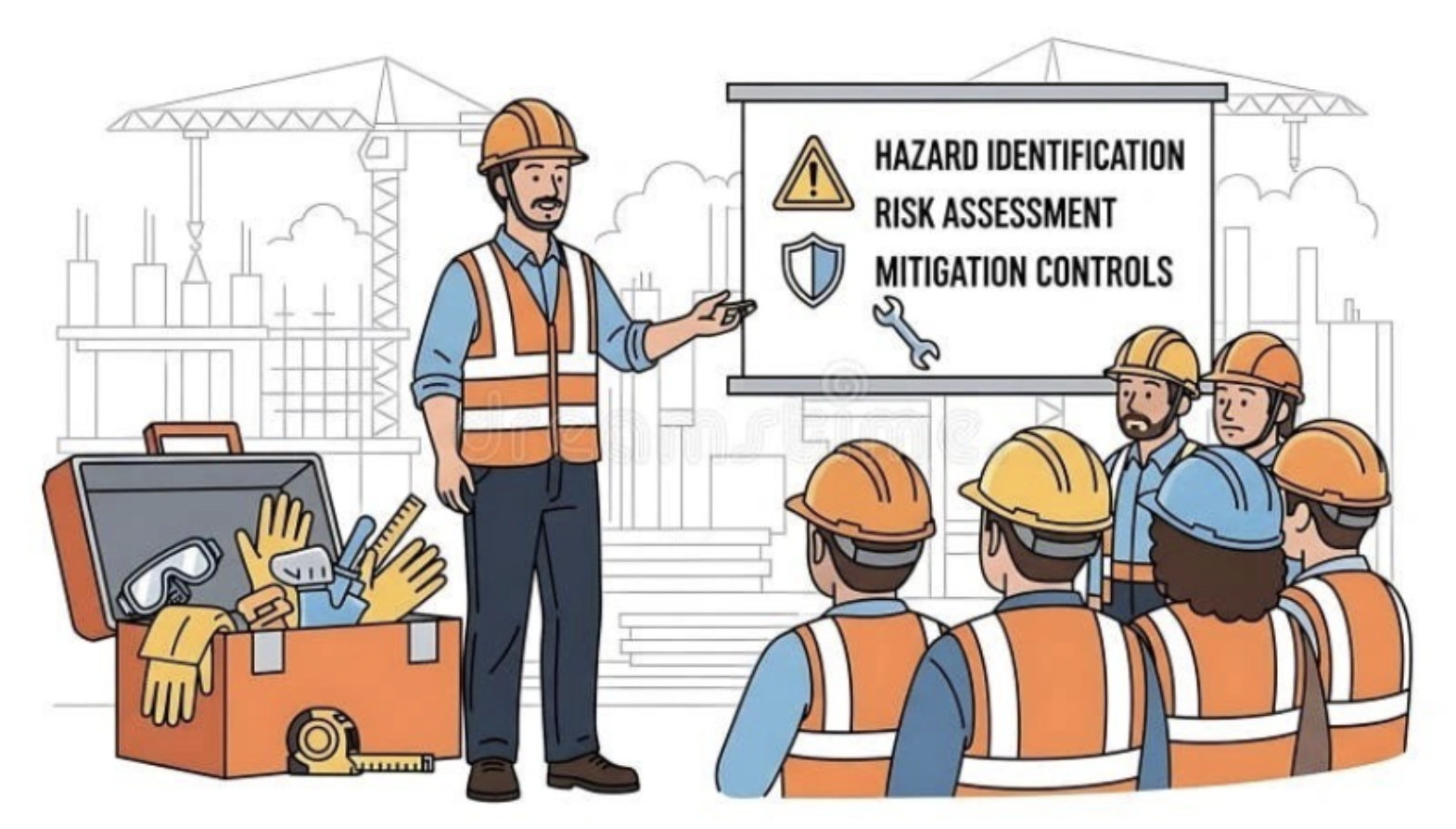
Workplace safety represents another vital application. Over 2.78 million annual fatalities occur due to occupational accidents globally [6]. Organizations deploy risk matrices to review hazards before incidents happen. Financial services firms apply specialized matrices to assess threats like phishing attacks that target customer data or insider misuse of sensitive information and rate these scenarios against probability and financial effect axes.
Risk matrices prove most valuable during project planning phases. Identifying potential hurdles before launch prevents delays that get pricey. Regulatory compliance reviews in healthcare, finance and pharmaceuticals benefit from matrices that highlight high-severity compliance gaps and require immediate remediation. Organizations that conduct periodic risk assessments use matrices to track how threat profiles evolve over time, especially when you have dynamic environments like cybersecurity management. Strategic decision-making around mergers, investments or market expansion relies on matrices to make complex risk scenarios comparable and digestible for executive teams.
Conclusion
We've walked through how risk assessment matrices change threat management from reactive firefighting to proactive planning. You plot likelihood against impact and gain clarity on which risks just need immediate attention and which can wait. This visual tool lets you prioritize resources effectively whether you manage a small project or oversee enterprise-level operations. Start building your matrix today. You'll foster the strategic foresight needed to protect your organization's objectives.
References
[1] - https://en.wikipedia.org/wiki/Risk_matrix
[2] - https://www.metricstream.com/learn/what-is-risk-matrix.html
[3] - https://trackernetworks.com/blog/risk-assessment-matrix-guide
[4] - https://www.stakeholdermap.com/risk/risk-assessment-matrix-simple-3x3.html
[6] -https://www.rmg-sa.com/en/risk-assessment-table-your-comprehensive-guide/















































.png)











.png)
.png)
.png)
.png)
.png)
.png)
.png)

.png)
.png)
.png)
.png)
.png)
.png)
.png)
.png)
.png)
.png)
.png)
.png)
.png)
.png)
.png)
.png)


Ready to Save Lives at Work?
With Impress Solutions, you’re not just getting a service, you’re securing peace of mind with a partner you can trust. Book a free consultation today, and let’s map out how we can help you save lives at work.

.png)