
Hazard Definition: What It Really Means and Why Your Safety Depends on It

Getting the hazard definition wrong doesn't just create paperwork problems. It compromises your risk management process and puts workers at real risk then. OSHA views the non-identification of hazards as one of the root causes behind workplace injuries, illnesses and incidents. A hazard is a situation, condition or thing that may be dangerous to worker safety or health. Many organizations struggle with vague or inconsistent definitions though.
This piece will clarify the safety hazard definition and explore how workplace hazard definition varies by context. We'll distinguish between risk and hazard definition and show you why accurate identification matters specifically when protecting your team.
What Is a Hazard? The Core Definition Explained
Breaking Down the Safety Hazard Definition
Most workplace safety standards join on a simple truth: a hazard is any source of potential harm. OSHA means "any source of potential damage, harm or adverse health effects on something or someone under certain conditions at work" [1]. The Health and Safety Authority in Ireland offers a similar viewpoint and defines a hazard as "a potential source of harm or adverse health effect on a person or persons" [2].
Notice the emphasis on "source" and "potential." A hazard doesn't require actual injury to qualify. The mere capability to cause harm makes something hazardous. SafeWork NSW simplifies this and states that a hazard is "anything that has the potential to cause harm to a person" [3]. This broad interpretation covers everything from frayed electrical cords to poorly designed workstations and workplace stress.
The Canadian Center for Occupational Health and Safety adds useful context: hazards can affect people as health effects, organizations as property or equipment losses, or the environment [1]. The scope extends beyond worker injuries to include broader organizational and environmental effects.
Hazard Definition in Safety Standards
Formal safety standards provide more structured definitions. The International Standards Organization (ISO) in ISO45001 defines a hazard as "a source with a potential for injury and ill health" [4]. The International Labor Organization took a different approach and described it as "the inherent potential to cause injury or damage to people's health" [4].
Australia's Code of Practice defines hazard as "a situation or thing that has the potential to harm a person" [4]. This changes the language from "source" to "situation or thing" and reflects subtle variations in how different jurisdictions imagine workplace hazards.
These definitions share common ground: potential for harm, focus on health and safety effects, and applicability before any actual incident occurs. The variations mainly involve terminology priorities rather than fundamental conceptual differences.
How Workplace Hazard Definition Is Different Across Industries
Industry-specific applications of the hazard definition remain consistent in principle but vary in focus. SafeWork South Australia emphasizes that hazards can involve "a task, a chemical or an item of plant or equipment" [5]. Construction sites prioritize safety hazards like unguarded machinery and heights. Healthcare facilities focus heavily on biological hazards from pathogens and infectious materials [5].
The psychosocial hazard definition represents a newer progress in workplace safety thinking and covers stress, violence, and other psychological stressors [1]. Chemical hazards demand attention across manufacturing, laboratories, and retail environments where cleaning products pose risks [5].
Despite these variations, the underlying principle remains unchanged: anything capable of causing harm under certain conditions qualifies as a hazard.
What Hazards Are NOT: Clearing Up Common Confusion
Misunderstanding what constitutes a hazard creates confusion that ripples through your whole safety program. Several terms get conflated with hazards, but recognizing these differences sharpens your identification process.
Hazard vs Incident: Understanding the difference
A hazard represents a circumstance where something could happen. An incident is when it does [6]. SafeWork Australia defines a hazard as anything with the potential to cause harm, while an incident is an unplanned event that results in or has potential for injury or ill health [6]. The University of Melbourne clarifies this further: a hazard is potential and an incident is actual occurrence [7]. You can have hazards present for years without incidents, but you cannot have incidents without preceding hazards.
Hazard vs Activity: Why Driving Isn't a Hazard
Activities themselves are not hazards. Driving as an activity contains multiple hazards like distraction and vehicle defects, but the act of driving lacks the specificity required for proper hazard identification. Label an entire activity as the hazard and you miss the actual sources of potential harm embedded within that activity.
Hazard vs Risk: Two Sides of Safety Management
Hazards and risks work together but mean different things. A hazard is something that has the potential to harm you [8]. Risk is the likelihood of that hazard causing harm [8]. The Health and Safety Executive explains it this way: hazard equals what could cause harm and risk equals how likely that harm is to happen and how bad it could be [9]. Hazards exist whether anyone is exposed or not. Risk depends on exposure and circumstances [9].
Hazard vs Control Deficiency: Missing Guards and More
Control deficiencies are not risks or hazards [10]. Missing machine guards represent a control deficiency. The hazard is the exposed moving parts or rotating components. OSHA cited 2,831 violations for missing machine guards in one year [11]. This confusion costs organizations by a lot.
Why Accurate Hazard Definition Matters for Your Safety
Precision in workplace hazard definition determines whether your controls protect workers or just satisfy documentation requirements.
Vague Definitions Lead to Ineffective Controls
Hazard assessments that list "slips/trips/falls" as the hazard create confusion. What gets controlled? The floor? Worker shoes? The walking activity itself? Identifying the actual hazard as "wet floor in entranceway" makes controls clear: install mats, improve drainage, fix leaks, or ensure prompt cleaning [1]. Vague hazard definitions produce vague controls that address the actual danger rarely.
Misidentified Hazards Result in Continued Incidents
Controls work only when they target the right hazard. A food processing plant implemented slip prevention training after multiple incidents. The actual hazard? Slippery floors from a drainage system that backed up during production peaks [12]. No amount of operator training fixes a design flaw. Listing "driving" as a hazard focuses attention on driver behavior rather than addressing specific dangers like icy roads or poorly maintained vehicles [1]. So incidents continue despite documented safety efforts.
Clear Definitions Enable Accountability
Assigning responsibility becomes impossible without precise hazard identification. Everyone becomes responsible for everything, which means no one takes ownership of anything [1]. Clear definitions create measurable intervention points and identifiable duty holders.
The Foundation of Risk Management Depends on It
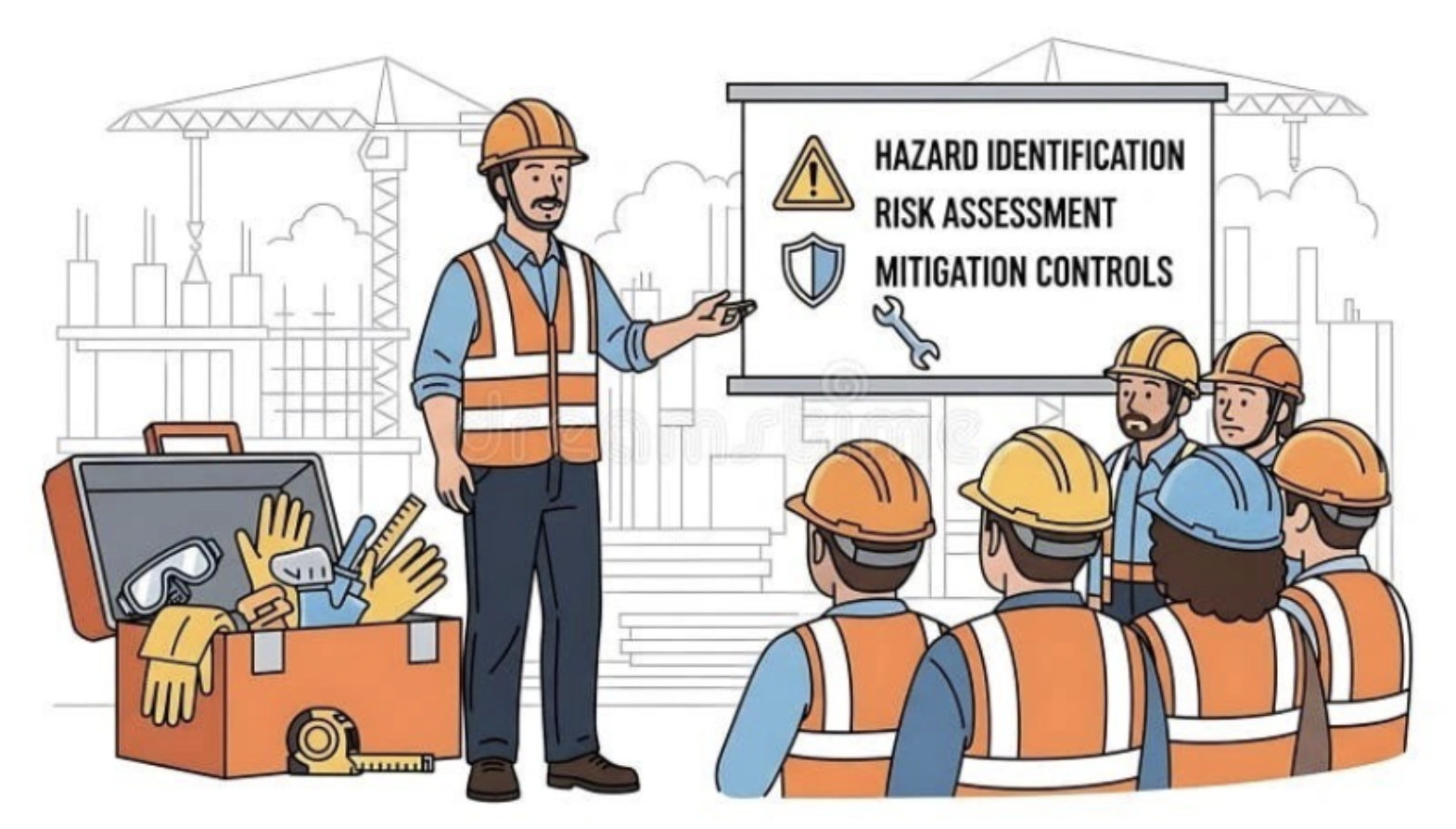
Hazard identification is the first step in risk management. Unidentified hazards never enter the risk assessment process, never receive preventive measures, and never get communicated to workers [13]. OSHA thinks about non-identification as a root cause for workplace injuries and incidents [13]. Fuzzy definitions undermine your entire safety foundation.
How to Identify and Define Hazards Correctly
Use the Standard Definition Consistently
You should apply the workplace hazard definition from your jurisdiction's safety authority in all assessments. Safe Work Australia defines it as "a situation or thing that has the potential to harm a person" [4]. This consistency prevents the confusion that arises when different teams interpret hazards in different ways.
Train Your Team on Proper Hazard Identification
Effective training focuses on recognition, evaluation and control [14]. Job Hazard Analysis breaks down tasks into individual steps and identifies risks at each phase [14]. You need to conduct hazard identification when you introduce new processes, equipment or machinery, before each shift, during work performance and after incidents occur [15].
Review and Refine Your Hazard Assessments
Safety assessments require review and revision at least every three years, before any modifications and after incidents with hazards [16]. You should review accident and near-miss logs to break down root causes and identify like trends in incidents [15]. Regular site walkthroughs help you catch emerging risks [15].
Create a Culture That Questions Unclear Hazards
Employees notice workplace changes that signal hazards first [17]. You should encourage reporting without fear of reprisal [17]. A culture where everyone anticipates unsafe acts and corrects them before harm occurs keeps safety prioritized [18].
Recognize Different Hazard Types: Physical, Chemical, Psychosocial and More
Workplace hazards fall into six core types: safety, biological, physical, ergonomic, chemical and workload [19]. Each category just needs specific identification approaches and controls tailored to the actual danger present.
Conclusion
A proper hazard definition goes beyond paperwork compliance. It determines whether your controls protect workers or just fill documentation. Accurate identification of hazards as specific sources of harm rather than vague activities creates targeted controls that prevent incidents. Train your team on precise identification and review your assessments often. Build a culture where everyone questions unclear hazards. Your workers' safety depends on it.
References
[1] - https://www.linkedin.com/pulse/why-properly-defining-hazard-essential-effective-mike-i5ujc
[2] - https://www.hsa.ie/eng/topics/hazards/
[4] - https://www.ohsbok.org.au/wp-content/uploads/2019/07/15-Hazard-as-a-concept-9-7-19.pdf
[5] - https://www.safeopedia.com/definition/646/workplace-hazard
[6] - https://www.safetysuiteglobal.com/post/is-it-an-incident-or-a-hazard-does-it-really-matter
[8] - https://www.efsa.europa.eu/en/campaigns/hazard-vs-risk
[9] - https://www.tsw.co.uk/blog/health-and-safety/difference-between-hazard-and-risk/
[10] - https://www.fairinstitute.org/blog/control-deficiencies-are-not-risks
[11] - https://www.ishn.com/articles/99394-when-machine-guards-are-missing-in-action
[12] - https://writesafe.com.au/2025/07/the-language-of-safety-hazards-seeing-what-others-miss/
[13] - https://pmc.ncbi.nlm.nih.gov/articles/PMC6546586/
[14] - https://ehscareers.com/employer-blog/ultimate-guide-to-hazard-identification-training/
[15] - https://safetyculture.com/topics/workplace-hazards
[16] - https://www.worksafe.vic.gov.au/how-review-safety-assessment
[17] - https://www.dnv.com/assurance/articles/what-is-hazard-identification/
[18] - https://www.safework.nsw.gov.au/safety-starts-here/building-a-health-and-safety-culture
[19] -https://www.ecoonline.com/en-au/blog/6-types-of-workplace-hazard/











































.png)









.png)
.png)
.png)
.png)
.png)
.png)
.png)

.png)
.png)
.png)
.png)
.png)
.png)
.png)
.png)
.png)
.png)
.png)
.png)
.png)
.png)
.png)


Ready to Save Lives at Work?
With Impress Solutions, you’re not just getting a service, you’re securing peace of mind with a partner you can trust. Book a free consultation today, and let’s map out how we can help you save lives at work.

.png)