How to Conduct a Risk Assessment: A Step-by-Step Guide for Workplace Safety

The best way to prevent injuries or illness at your workplace is to find the hazards that could cause injury or illness and fix them[6]. This process is what we call risk assessment[6].
A risk assessment is a systematic examination of everything at your workplace that could cause harm to people[7]. The risk assessment process involves identifying hazards and assessing risks at the workplace. You then implement controls and review how well they work[8].
We've created this complete guide to walk you through everything in the risk assessment steps. You might be conducting your first risk assessments or refining your existing approach. We'll show you how to manage workplace risks.
Understanding Risk Assessment in the Workplace
A risk assessment works as a decision-making tool beyond simply finding hazards. It's a systematic process that identifies hazards and risks, analyzes what would happen should these hazards occur, and determines which measures should be implemented to eliminate or control those risks[9]. The process also prioritizes actions based on their likelihood and effect.
Three general types exist. Large scale assessments apply to complex hazard sites in nuclear and oil and gas industries. They require advanced Quantitative Risk Assessment techniques[9]. Required specific assessments address legislative requirements—to name just one example, handling hazardous substances or manual handling operations[9]. General assessments manage workplace risks under health and safety administrations.
Employers are legally responsible for conducting risk assessments under WHS laws. This obligation extends to protecting anyone who could be affected by work operations[2]. The responsibility may be delegated to managers, supervisors, health and safety officers, or external consultants when specialized knowledge is needed[9]. For small businesses, owners handle this duty[9]. Employees contribute through their firsthand knowledge of hazards, but the employer retains ultimate accountability[9].
Of course, understanding the difference between hazards and risks matters. Hazards represent situations or things that could harm a person, while risks describe the chances of harm occurring and its severity[3].
The 4-Step Risk Assessment Process
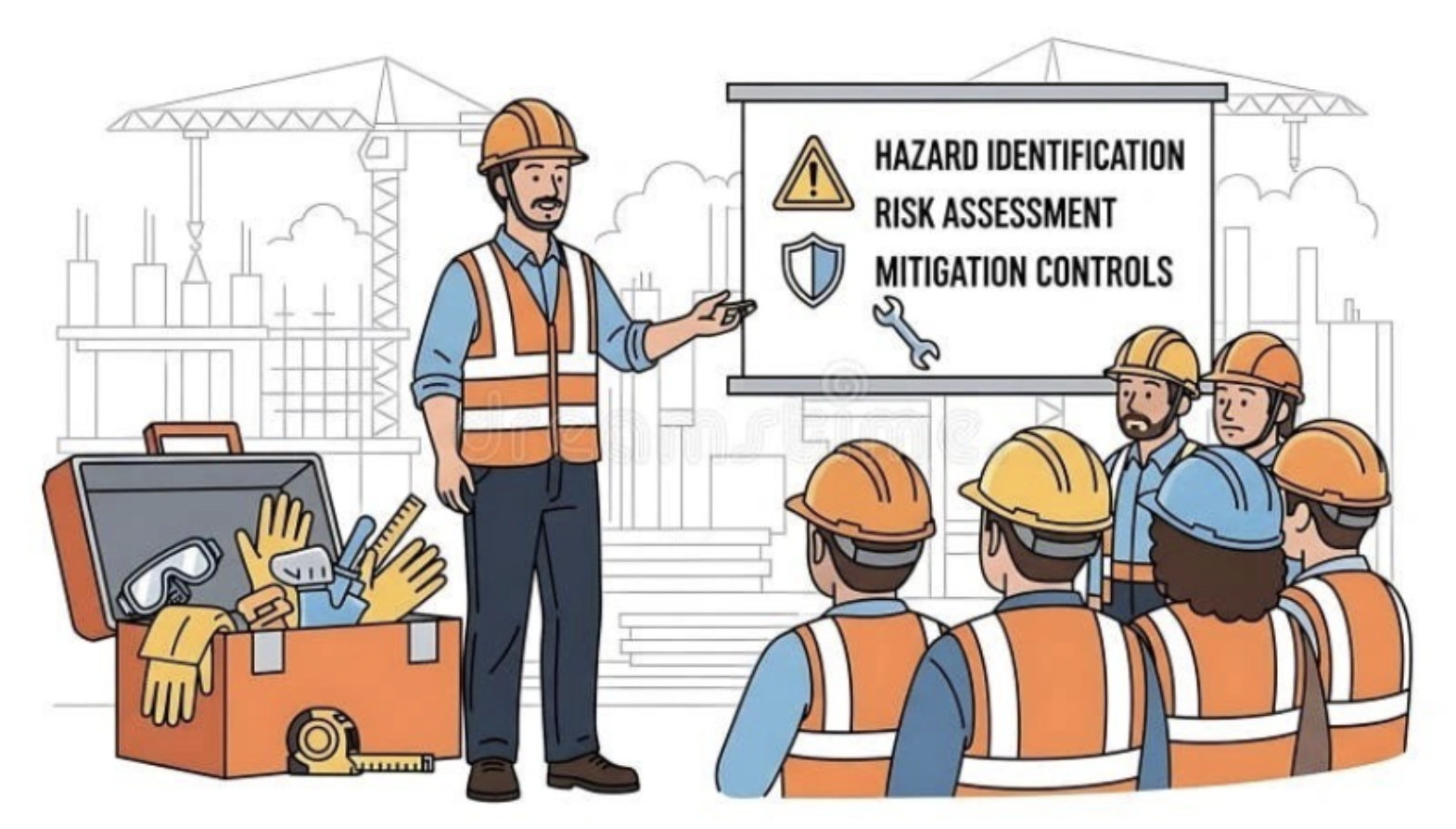
Most workplace risk management follows a four-step process: identifying hazards, assessing risks, controlling risks, and reviewing control measures.
Step 1: Identify Hazards
You must get into your workplace first to spot anything that could cause harm. Walk through work areas and observe how tasks are performed, how equipment is used, and what chemicals or substances are present. Talk to your workers about safety concerns, near misses, or unreported incidents. Review accident records, incident reports, and manufacturers' instructions for equipment and substances. Routine and non-routine activities such as maintenance, repair, or cleaning should be included. People who work off-site, visitors, contractors, and vulnerable groups like young workers, pregnant workers, or those with disabilities need your attention.
Step 2: Assess the Risks
You must determine how likely each hazard is to cause harm and how severe that harm could be after that. Who might be harmed and how? Think about these questions. Use a risk matrix that combines likelihood and effect to categorize risks as critical, high, moderate, low, or very low. This evaluation helps you prioritize which hazards just need immediate attention.
Step 3: Control the Risks
Apply the hierarchy of controls. Start with elimination, then substitution, engineering controls, administrative controls, and personal protective equipment as a last resort.
Step 4: Review Control Measures
Monitor controls to verify they remain effective, particularly when workplace changes occur or new hazards emerge.
Implementing Your Risk Assessment Successfully
Creating a risk assessment is one thing; making it work in practice is another. A competent person must lead the process and possess the Knowledge, Ability, Training and Experience (KATE) needed to identify hazards and apply sensible control measures[4]. Just as important is working with the people who perform the tasks. Their practical knowledge identifies hazards that desk-based assessments miss[4].
Avoid generic statements when you record controls. Replace vague instructions like "use appropriate equipment" with specific details such as "items over 25kg require two-person lifting"[4]. The longer your document, the less likely people will read it and understand the controls they need to apply[5]. Keep assessments concise and available.
Share findings with relevant team members after you complete the assessment. Maintain clear records of who has seen and acknowledged the content[4]. Risk assessments remain dynamic documents that require regular updates[4]. Review them annually at minimum, or sooner when tasks, equipment or personnel change[4]. Incidents and near misses demand immediate reviews, as do new control measures[5].
Maintain an indexed list of all risk assessments that includes review dates[4]. Keep assessments for five years as a general rule, with a three-year minimum since civil claims for injury can be made up to three years after an incident[1].
Conclusion
You now have a complete framework to conduct effective risk assessments in your workplace. The four-step process is straightforward: identify hazards, assess their risks, implement controls, and review them regularly. Note that the key is making your assessment practical and applicable rather than a paper exercise.
Start with your first assessment today and involve your team. Keep your documentation clear. This systematic approach will become second nature over time and create a safer workplace for everyone.
References
[1] - https://www.moorepay.co.uk/blog/health-safety-records-keep/
[2] - https://whsmonitor.com.au/what-is-a-risk-assessment/
[3] - https://business.gov.au/risk-management/health-and-safety/work-health-and-safety
[4] - https://www.work-wallet.com/blog/12-common-risk-assessment-mistakes-and-how-to-avoid-them/
[7] - https://nationalcover.com.au/risk-assessment-process-steps/
[8] - https://www.hse.gov.uk/simple-health-safety/risk/steps-needed-to-manage-risk.htm
[9] -https://keninstitute.com/who-is-responsible-for-risk-assessment-when-to-conduct-them/









































.png)







.png)
.png)
.png)
.png)
.png)
.png)
.png)

.png)
.png)
.png)
.png)
.png)
.png)
.png)
.png)
.png)
.png)
.png)
.png)
.png)
.png)
.png)
.png)
.png)
.png)
.png)


Ready to Save Lives at Work?
With Impress Solutions, you’re not just getting a service, you’re securing peace of mind with a partner you can trust. Book a free consultation today, and let’s map out how we can help you save lives at work.

.png)