
Hazard Meaning Explained: What Every Safety Professional Needs to Know
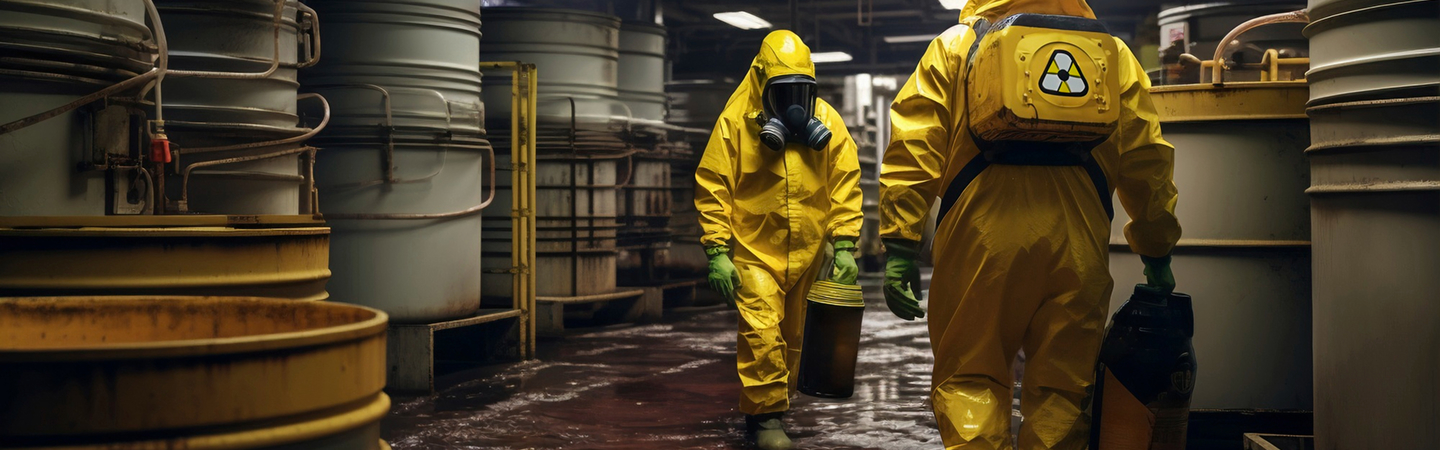
OSHA cited 2,831 violations for missing machine guards in one year[1], and the agency views non-identification of hazards as a root cause behind workplace injuries and illnesses[1][2]. Grasping what hazards mean is the foundation of workplace safety, so confusion between hazards and risks creates compliance gaps and preventable incidents.
Every safety professional needs to understand the hazard definition. What is a hazard? In fact, it's anything with the potential to cause harm in your workplace. We'll walk through the core differences between hazards and risks in this piece, explore the six main types of workplace hazards, and show you practical hazard identification strategies to protect your team and meet regulatory requirements.
What is a Hazard: Understanding the Core Definition
Breaking Down the Simple Hazard Definition
Every workplace safety professional encounters the same foundational question: what qualifies as a hazard? The most common workplace health and safety definition states that a hazard is any source of potential damage, harm or adverse health effects on something or someone. We're talking about the capacity to cause harm rather than harm itself.
SafeWork NSW simplifies this further. They define a hazard as anything that has the potential to cause harm to a person. The Canadian Center for Occupational Health and Safety adds useful context. Hazards can affect people as health effects, organizations as property or equipment losses, or the environment.
The emphasis on "source" and "potential" in these hazard definitions matters. A hazard doesn't require actual injury to qualify. The mere capability to cause harm makes something hazardous. This difference matters because hazards exist on their own, independent of context. They're inherent in materials, environments, or activities whether or not anyone gets hurt.
Hazards can be as obvious as a spill on the floor or as subtle as long-term exposure to low levels of toxic chemicals. They range from the tangible like unguarded machinery to the intangible such as stress or high workloads.
How Safety Standards Define Hazards
Workplace safety standards share common ground, but subtle variations exist in how different jurisdictions frame hazard meaning. ISO 45001 defines a hazard as a source with a potential to cause injury and ill health. The International Labor Organization took a different approach. They described it as the inherent potential to cause injury or damage to people's health.
Australia's Code of Practice shifts the language from "source" to "situation or thing" that has the potential to harm a person. The Health and Safety Authority in Ireland offers a similar viewpoint and defines a hazard as a potential source of harm or adverse health effect on a person or persons.
These variations involve terminology priorities rather than fundamental conceptual differences. The core principle remains unchanged: anything capable of causing harm under certain conditions qualifies as a hazard.
Why 'Potential to Harm' is the Key Phrase
The phrase "potential to harm" represents the core concept that separates hazards from actual incidents. According to the OHS Body of Knowledge, hazards represent the inherent potential for something to cause harm but do not indicate the likelihood of harm occurring.
A chemical remains a hazard whether stored safely in a locked cabinet or spilled across a workspace. The hazard exists on its own. What changes is the risk level, not the hazard itself. Understanding this difference prevents the common mistake of confusing the resulting harm with the actual source of the hazard. Tuberculosis might be called a hazard by some, but the TB-causing bacteria would be the actual hazard or hazardous biological agent.
Hazard vs Risk: Clearing Up the Confusion
Safety professionals often use hazard and risk interchangeably, yet this confusion leads to bloated procedures and thin controls. The Health and Safety Executive clarifies that a hazard is anything with potential to cause harm, whereas risk is the chance that harm will occur together with how severe the outcome could be.
What Makes Something a Hazard Instead of a Risk
A hazard exists on its own, independent of any specific interaction or situation. Risk considers both the probability of harm occurring and its potential severity. You can express this relationship mathematically: Likelihood x Severity = Risk. A toxic chemical stored in a sealed, ventilated area presents low risk despite remaining a high hazard. The risk jumps to high if that same chemical leaks or gets handled without PPE.
How Likelihood Changes Risk but Not the Hazard
An area experiencing a severe hurricane once in 200 years faces the same hazard but only one-tenth the risk of a similar area hit by an equally severe hurricane once in 20 years. The hazard's magnitude stays constant. What changes is the probability of occurrence, which affects risk calculation. The inherent risk represents the level an activity would pose without any controls in place, while residual risk reflects what remains after you implement control measures.
Ground Examples of the Difference
Stairs serve as a practical illustration. You can't eliminate the hazard without creating access problems, but you can reduce the risk through handrails and non-slip treads with proper lighting. A forklift truck presents multiple risks: contact with pedestrians, overturning, and dropping loads. Each risk stems from the same hazard yet requires different control approaches.
Other Common Misconceptions: Incidents and Activities
A hazard represents a circumstance where something could happen. An incident occurs when it does. SafeWork NSW defines a near miss as an occurrence that might have led to injury, danger to health, or property damage. Understanding this difference supports better categorization and proactive hazard and risk management rather than reactive responses.
The Six Main Types of Workplace Hazards
OSHA identifies six core categories that include most workplace hazards. Safety professionals can conduct full hazard identification and implement targeted controls when they understand these classifications.
Physical Hazards: Noise, Radiation and Temperature
Physical hazards harm the body without touching it. Noise that reaches 85 decibels can cause permanent hearing damage over time or from sudden loud sounds. Radiation splits into ionizing types like X-rays and gamma rays, and non-ionizing forms like ultraviolet rays and microwaves. Heat can cause stroke, exhaustion and burns. Extreme cold leads to frostbite and hypothermia. Vibration hazards include hand-arm vibration from power tools and whole-body vibration from vehicles or industrial machinery.
Chemical Hazards: Toxic and Flammable Substances
Chemical hazards arise when workers encounter any chemical preparation in solid, liquid, or gas form. These substances create health hazards through inhalation, skin absorption, or ingestion. They also create physiochemical hazards that include fires, explosions and corrosive reactions. Common examples include cleaning products, paints, acids, solvents, welding fumes, gasses like carbon monoxide and flammable materials.
Biological Hazards: Pathogens and Bodily Fluids
Biological hazards involve disease-producing agents transmitted through various exposure routes. Healthcare workers face the highest risks from blood-borne viruses that include hepatitis B, hepatitis C and HIV. Other biological threats include tuberculosis, coronaviruses, bacteria, fungi, mold and insect bites.
Ergonomic Hazards: Posture and Repetitive Movements
Ergonomic hazards strain the musculoskeletal system through awkward postures, static positions, repetitive motions, or excessive force. Workers don't always notice the strain right away. This makes these hazards especially hard to spot. Workstations that are adjusted wrong, frequent lifting, poor posture and hand-arm vibrations all contribute to musculoskeletal disorders.
Safety Hazards: Equipment and Electrical Dangers
Safety hazards create immediate injury risks through physical contact or proximity. Spills, tripping hazards, working at heights, unguarded machinery and confined spaces all fall under this category. Electrical hazards include frayed cords, missing ground pins, improper wiring and contact with overhead power lines. The construction industry accounts for 52% of all electrical fatalities in the US workplace.
Psychosocial Hazards: Stress and Workplace Bullying
Psychosocial hazards affect psychological well-being and include workload pressure, lack of control, workplace violence, sexual harassment and bullying. Nearly 30% of workers reported that they find their work stressful always or often. Non-fatal workplace violence events increased by 25% from 2015 to 2019. These hazards cause physical injuries, burnout, cardiovascular disease, depression and sleep disturbances.
How to Identify and Manage Hazards Effectively
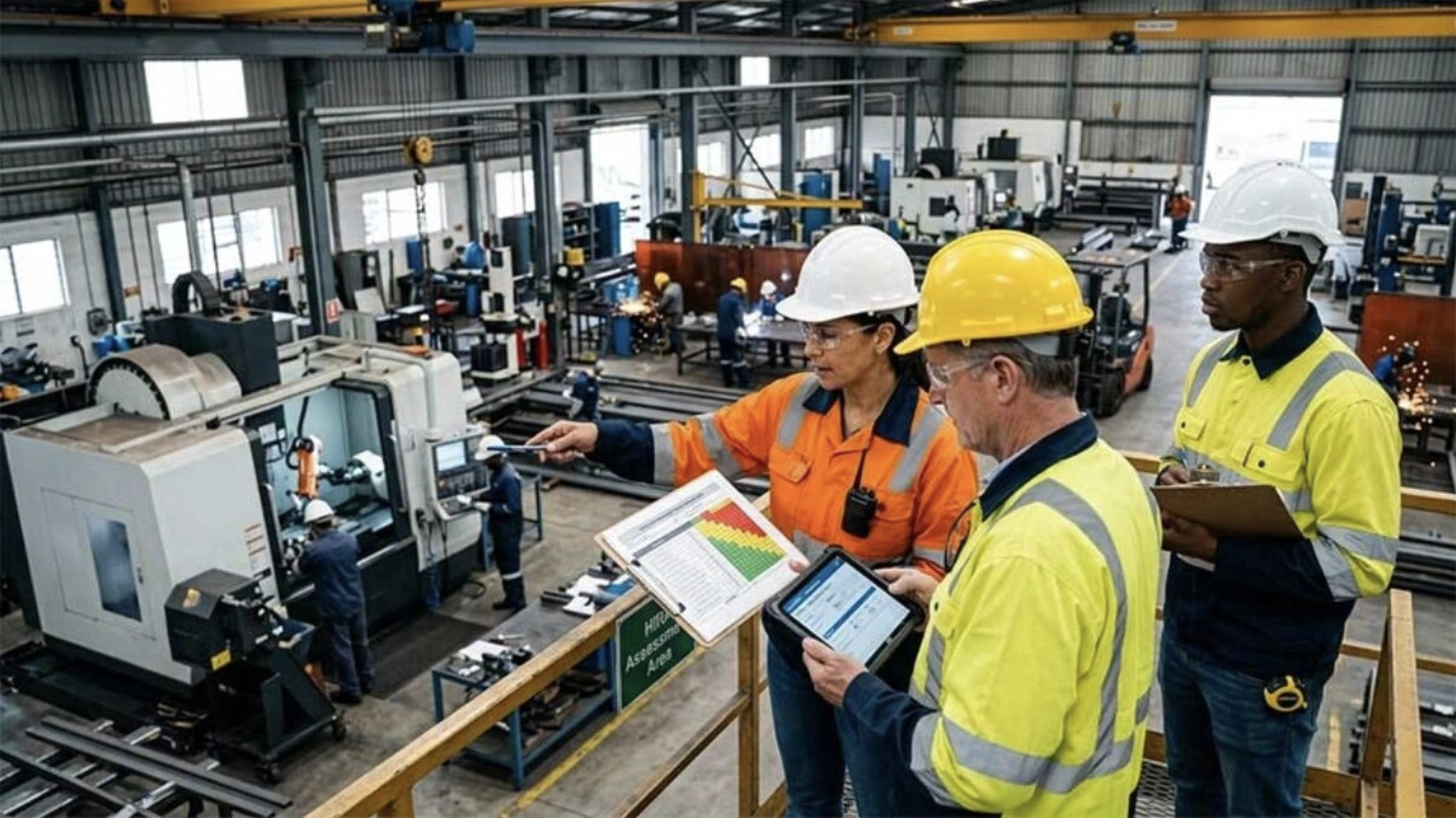
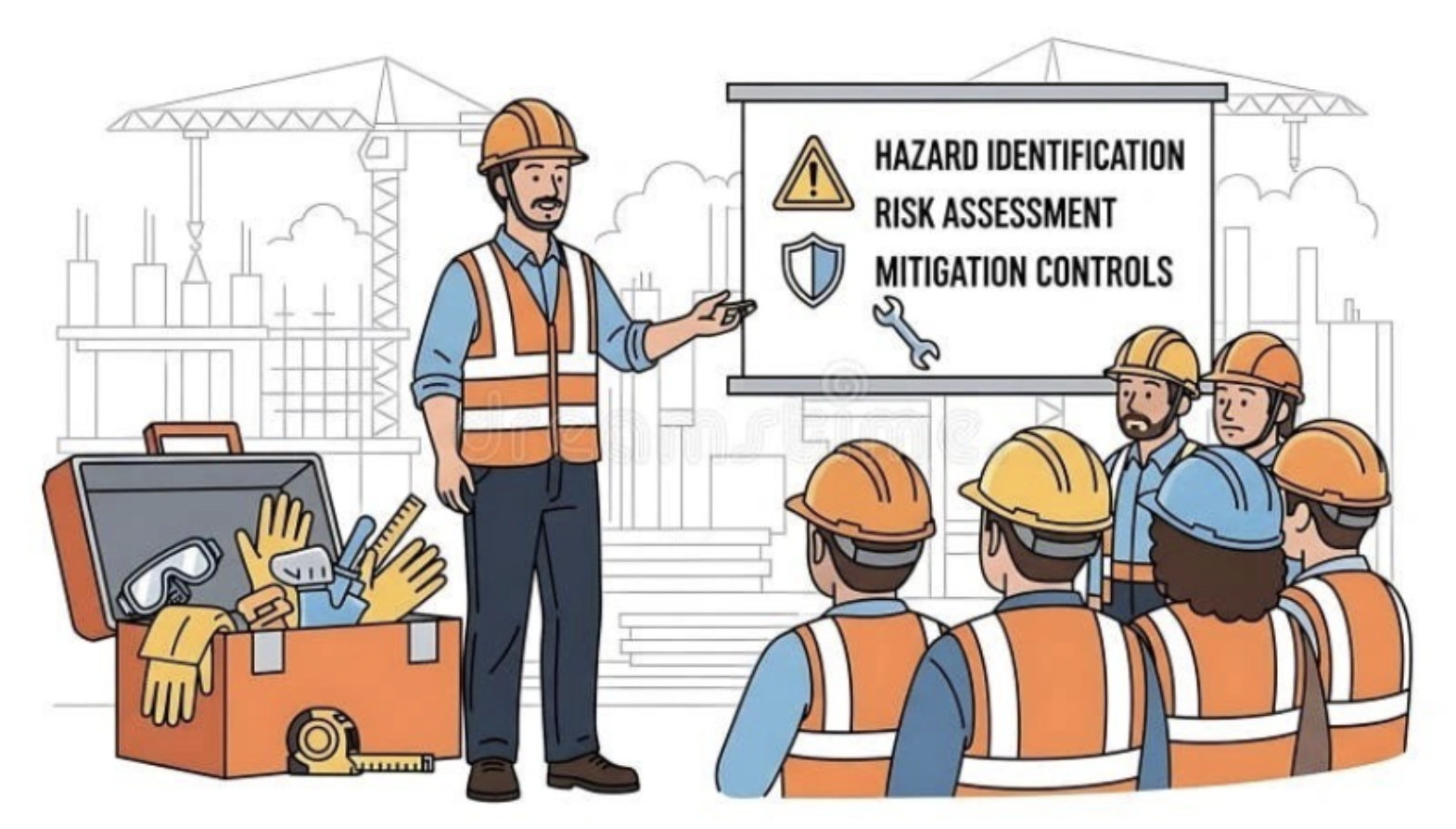
Spotting workplace hazards before they cause incidents requires systematic methods. Inspections provide the life-blood for hazard identification through thorough examination of equipment, machinery, work areas and practices. Job hazard analysis breaks down tasks into individual steps to identify risks at each phase. Workers offer valuable insights since they directly encounter conditions daily. Investigations after incidents reveal why hazards exist and their root causes that might otherwise remain hidden.
Starting with Proper Hazard Identification
We need to look at all work aspects. This includes routine and non-routine activities like maintenance or cleaning. Get into injury records, near-miss data and employee complaints. Think over long-term hazards such as noise exposure among immediate safety threats. Visual literacy training teaches workers to spot hazards through structured observation. They move from the perimeter inward and note elements like line, shape, color and texture.
Using the Hierarchy of Control
The hierarchy ranks controls from most to least effective: elimination, substitution, engineering controls, administrative controls and PPE. Start at the top and assess feasibility before moving down. Elimination removes the hazard entirely. Substitution replaces it with something less dangerous when that's impossible. Engineering controls modify equipment or processes. Administrative measures change work procedures. PPE serves as the last resort since it relies on human behavior.
Training Your Team on Recognition
Effective training gives employees the recognition, evaluation and control skills. Workers learn to spot hazards specific to their environment and assess what it all means. They apply the hierarchy of controls. Job safety analysis becomes a practical tool to document risks at each workflow step.
When to Review and Update Your Assessments
Review assessments at least annually. Do this immediately after incidents, before workplace modifications, when new equipment arrives or after regulatory changes. Mining operations must review every three years minimum and after any incident with a mining hazard. Continuous monitoring catches emerging risks between scheduled reviews.
Conclusion
When you understand hazard meaning correctly, you protect your team and stay compliant with regulations. The difference between hazards and risks is the foundation of effective safety management. We've covered the six main hazard types and practical identification strategies you can implement right away. The hierarchy of controls helps you address hazards in a systematic way. Review your assessments regularly as your workplace evolves.
References
[2] -https://pmc.ncbi.nlm.nih.gov/articles/PMC6546586/









































.png)








.png)
.png)
.png)
.png)
.png)
.png)
.png)

.png)
.png)
.png)
.png)
.png)
.png)
.png)
.png)
.png)
.png)
.png)
.png)
.png)
.png)
.png)
.png)
.png)
.png)
.png)


Ready to Save Lives at Work?
With Impress Solutions, you’re not just getting a service, you’re securing peace of mind with a partner you can trust. Book a free consultation today, and let’s map out how we can help you save lives at work.

.png)