
JSA Safety Analysis: A Step-by-Step Guide to Controlling Workplace Hazards

Work-related incidents claimed 4,306 workers' lives in Australia from 2003 to 2021. The year 2023 alone saw 82 Australians killed at work. JSA safety protocols could have prevented many of these tragedies.
A Job Safety Analysis (JSA), or job hazard analysis, helps identify and control unrecognized hazards before they cause harm. Some OSHA standards require a JSA. The Bloodborne Pathogens and Personal Protective Equipment standards are examples.
This piece will walk you through what a JSA is, the JSA steps to conduct one, job safety analysis examples, and how to create a practical JSA job safety analysis template for your workplace.
What is a Job Safety Analysis (JSA)
A job safety analysis represents a systematic risk management process that identifies hazards related to specific job tasks before incidents occur [1]. General safety risk management focuses on identifying potential hazards throughout a workplace. JSA zeroes in on job-specific hazards and addresses them at each step of the job [1].
The analysis technique focuses on the relationship between the worker, the task, the tools, and the work environment [2]. We can identify uncontrolled hazards when we break each job into individual steps. Then we take steps to eliminate or reduce them to an acceptable risk level [2]. Operating a grinder, using fire suppression equipment, or performing vehicle maintenance involves distinct hazards. We can identify and control these through this systematic approach [3].
JSA goes by several names in different industries and regions. A job safety analysis is sometimes referred to as a job hazard analysis (JHA), safe job analysis (SJA), or task hazard analysis (THA) [1][4]. The terminology differs, but their goal remains the same: identifying existing and potential hazards of a task, assessing their risks, and preventing losses. We do this by recommending and implementing effective control measures [5].
This technique is an integral part of broader safety management systems [1]. JSA serves multiple purposes beyond hazard identification. These include determining safety training contents and improving product quality. The technique also helps develop safety procedures and instructions [5].
Step-by-Step Process: How to Conduct a Job Safety Analysis
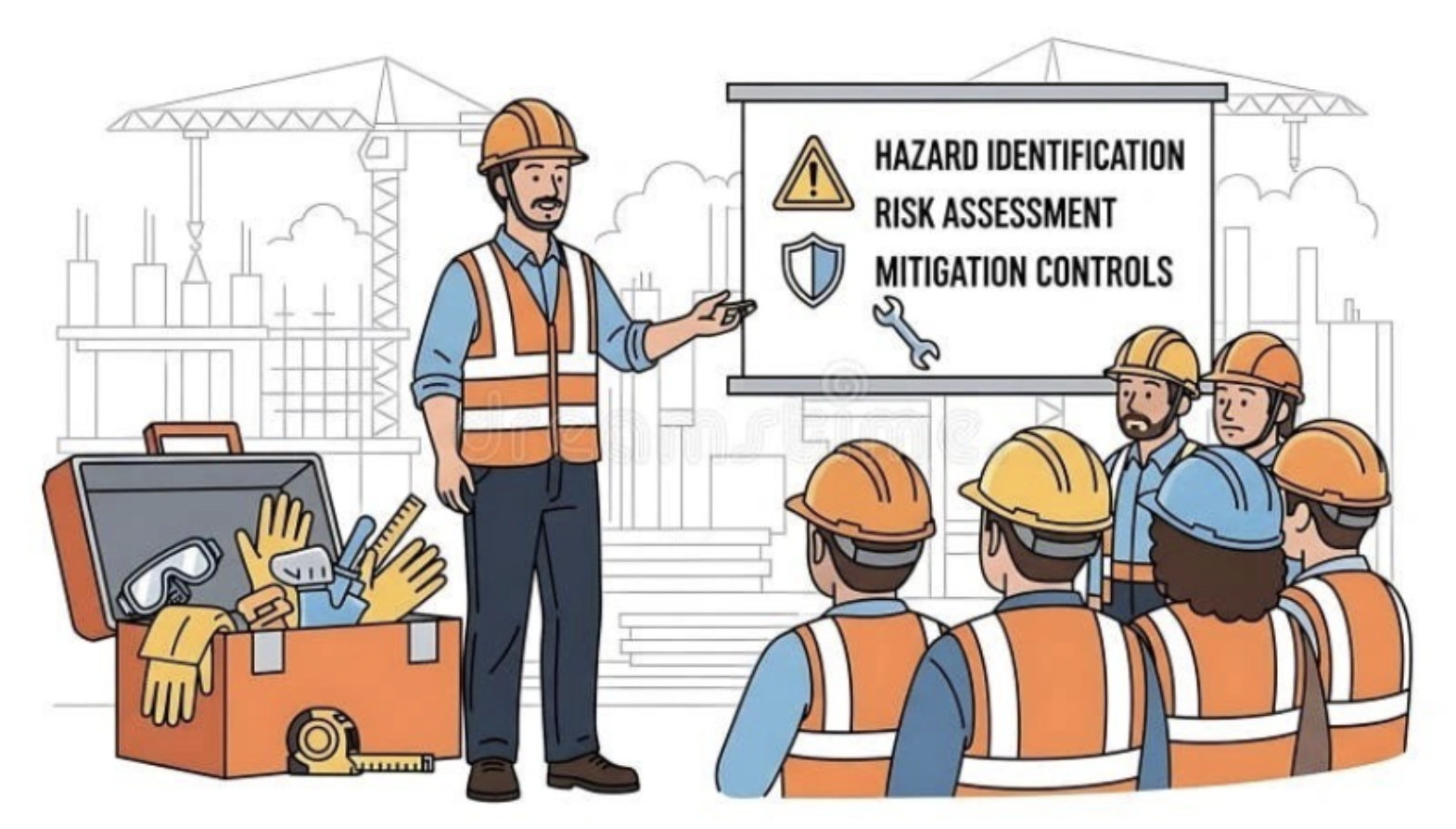
A job safety analysis follows a structured approach that builds safer work processes. The process involves six core steps:
- Select and prioritize jobs to analyze: Focus on tasks with the highest injury rates and potential for severe injuries. Jobs where one error could lead to serious accidents need attention. Newly created or modified procedures require review, along with infrequently performed work. Complex jobs that require written instructions should also receive priority attention.
- Break the job into sequential steps: Watch workers perform the task and divide it into simple steps. Most jobs require fewer than 10 steps. If more steps are needed, think over dividing the job into two separate analyzes. The correct sequence matters, as steps out of order may cause teams to miss hazards or introduce ones that don't exist.
- Identify hazards at each step: Ask what could go wrong at each point. Look for slips and falls, and pinch points where body parts or clothing could get caught. Exposure to extreme temperatures, loud noises, vibration, harmful substances, and electrical hazards must be identified.
- Develop control measures: Apply the hierarchy of controls. Start with elimination, followed by substitution, isolation, engineering controls, and administrative procedures. PPE serves as the last option.
- Document and communicate: Make findings available to all employees who perform the job.
- Review on a regular basis: Revisit JSAs whenever procedures change or incidents occur. Workers often spot issues that weren't obvious at first.
Creating an Effective JSA Job Safety Analysis Template
A practical jsa job safety analysis template captures critical safety information in a standardized format. Your template should include several core sections that change the analysis process into actionable documentation.
Job information records the task name, location, department, date of analysis, and names of individuals who prepare or review the JSA [6]. This establishes accountability and tracking. The template then breaks down each job into logical steps. Tasks like "set up ladder," "collect tools," or "operate forklift" are documented in sequence [6].
Hazards identification forms the next component. This section lists slips, trips, manual handling risks, falling objects, exposure to chemicals, electrical shocks, or ergonomic strains associated with each step [6]. The risk rating section assesses likelihood and severity, often using a risk matrix to assign risk scores [7].
The controls section applies the hierarchy of controls and documents elimination, substitution, engineering controls, administrative controls, and PPE for each identified hazard [6]. Current controls and residual risk assessment show control effectiveness [7].
A review and authorization section comes last with supervisor or safety officer signatures that confirm the analysis has been reviewed and accepted [6]. Review dates ensure updates happen on schedule [7]. Many businesses maintain JSAs in digital form so they can share and update them easily at worksites of all types [7].
Conclusion
You now have everything you need to implement JSA safety protocols in your workplace. The six-step process we covered provides a practical framework to identify and control hazards before they cause harm.
Select high-risk jobs first, create your JSA template, and involve your workers in the analysis process. In fact, their firsthand insights often reveal hazards that aren't obvious.
Note that conducting a JSA isn't a one-time task. Review and update your analyzes, and workplace safety will improve substantially over time.
References
[1] - https://www.enviroessentials.com.au/blog/2023/08/conducting-a-job-safety-analysis/
[2] - https://www.osha.gov/sites/default/files/publications/OSHA3071.pdf
[3] - https://en.wikipedia.org/wiki/Job_safety_analysis
[4] - https://www.sciencedirect.com/science/article/abs/pii/S0925753518316874
[5] - https://pmc.ncbi.nlm.nih.gov/articles/PMC10300476/
[7] -https://sprintlaw.com.au/articles/jsa-examples-a-practical-guide-for-australian-businesses/














































.png)











.png)
.png)
.png)
.png)
.png)
.png)
.png)

.png)
.png)
.png)
.png)
.png)
.png)
.png)
.png)
.png)
.png)
.png)
.png)
.png)
.png)
.png)
.png)


Ready to Save Lives at Work?
With Impress Solutions, you’re not just getting a service, you’re securing peace of mind with a partner you can trust. Book a free consultation today, and let’s map out how we can help you save lives at work.

.png)