FMEA Mastery: Failure Modes and Effects Analysis Steps That Actually Work

FMEA helps organizations spot potential issues before they get pricey. The U.S. military created this step-by-step method in the 1940s. Today, industries of all types use it to boost reliability, improve safety, and lower failure risks.
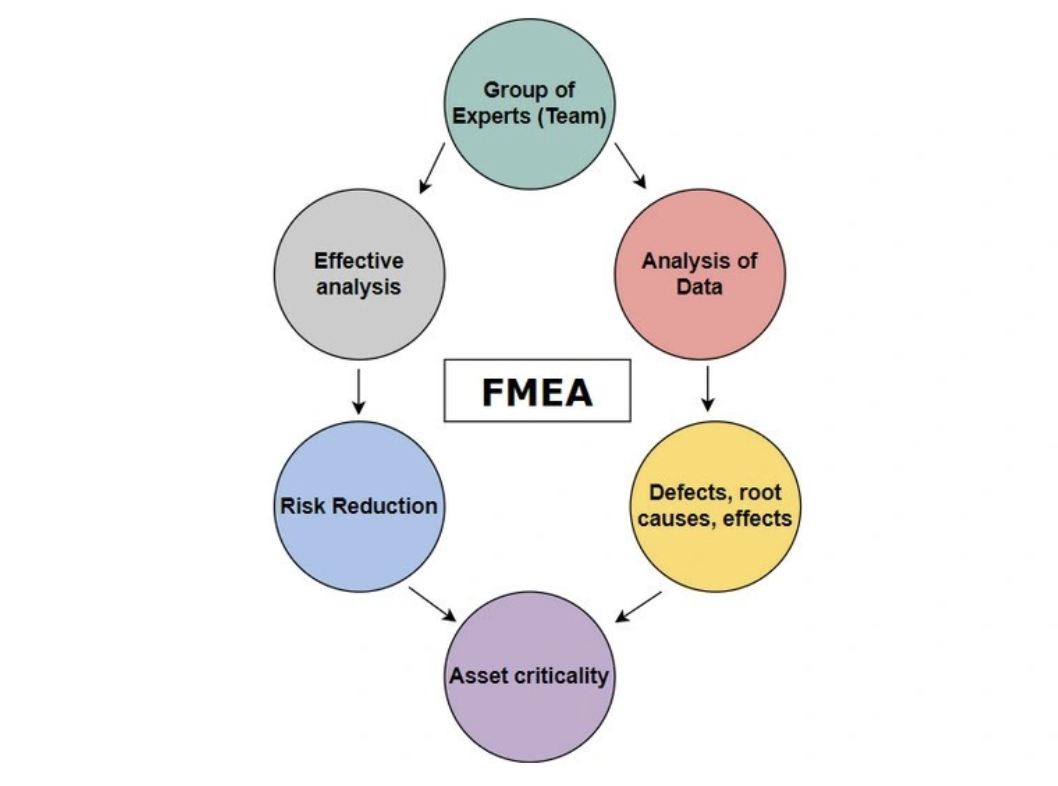
Let me walk you through the detailed process of failure mode analysis that will improve your quality management system. FMEA guides teams to examine process steps, possible failure modes, their root causes, and what it all means. Teams can calculate Risk Priority Numbers (RPNs) to focus on urgent issues that need quick fixes. Our discussion includes practical steps to create an effective FMEA that works in automotive, aerospace, healthcare, and manufacturing sectors.
Understanding the Foundations of FMEA (Failure Modes and Effects Analysis)
FMEA gives organizations the ability to spot potential failures before they happen. It offers a well-laid-out way to prevent problems instead of fixing them after the fact.
What is failure mode and effect analysis?
Failure Mode and Effects Analysis (FMEA) helps teams spot possible failures in design, manufacturing, or service through a step-by-step process [1]. The name breaks down into two parts: "Failure mode" shows how things might go wrong, while "effects analysis" looks at what happens when they do [1]. Teams can review failures based on how severe they are, how often they happen, and how easy they are to spot [1].
The U.S. military created FMEA back in the 1940s. Over the last several years, it has become a go-to risk analysis tool for companies of all sizes [1]. The main goal is to reduce or eliminate potential failures through preventive action [1].
Core principles of FMEA: Proactive and preventive
FMEA stands out because it takes action before problems occur. Teams don't wait for issues to pop up - they work to spot and fix potential problems during development. This approach helps teams:
- Find and rank possible system or process failures
- Understand what these failures could mean
- Take steps to eliminate or lower risks, starting with the most critical ones
- Keep track of known risks to keep getting better
FMEA works best when teams use it early in development before changes get pricey [1].
Types of FMEA: Design, Process, System, and more
FMEA comes in several forms, each with its own purpose:
- Design FMEA (DFMEA): Looks at product design to stop breakdowns, short product life, and safety issues [2]
- Process FMEA (PFMEA): Checks manufacturing processes to boost quality and reliability [2]
- System/Functional FMEA (SFMEA): Reviews whole systems and how their parts work together [3]
- Software FMEA: Checks code logic and possible software bugs [4]
- Service FMEA: Focuses on how service businesses handle transactions [4]
When to use FMEA in product or process lifecycle
Teams should use FMEA:
- Right at the start of design [1]
- While designing or updating products, processes, or services [1]
- Before creating control plans for new or changed processes [1]
- When setting goals to improve existing processes [1]
- To figure out why existing products or processes failed [1]
- Throughout the product or service's life [1]
On top of that, FMEA really shines when teams need to review new processes before launch and check how changes might affect existing processes [5].
Step-by-Step Breakdown of the FMEA Process
Understanding the FMEA process helps you identify and analyze risks systematically. A well-laid-out method will give a complete picture and helps catch all critical failures during assessment.
Step 1: Identify potential failure modes
Teams need to spot all possible ways a product, process, or system might fail to do its job. These failure modes show specific scenarios where function could be lost. This vital first step needs you to:
- Break down the process into manageable parts
- Work with experts across functions to find potential failure scenarios
- Look at past data to spot failure patterns
- Write down each failure mode in clear, technical terms
Step 2: Determine the effects of each failure mode
Each failure mode needs careful analysis to understand what happens if things go wrong. These effects could touch customers, connected systems, regulatory compliance, or how things run. You should ask: "What does the customer experience because of this failure?" and "What happens when this failure occurs?"
Step 3: Assess severity, occurrence, and detection
Once you know the failure modes and effects, you need to assess three key factors:
- Severity (S): Score how serious the effects are from 1-10, where 10 means catastrophic results [3]
- Occurrence (O): Rate how likely the failure is on a 1-10 scale, with 10 meaning it's almost certain to happen [4]
- Detection (D): Figure out how easily current controls can catch the failure before customers see it, using 1-10 (10 means it's almost impossible to spot) [6]
Your organization's specific needs should shape these rating scales to make them more useful [7].
Step 4: Calculate the Risk Priority Number (RPN)
The final step uses this formula to calculate the Risk Priority Number:
RPN = Severity (S) × Occurrence (O) × Detection (D) [8]
This score ranges from 1 to 1000 and helps you decide which failures need immediate attention [4]. Higher RPN scores point to more serious risks that need fixing first [8].
Implementing and Acting on FMEA Results
RPN calculation helps identify critical risks, and FMEA implementation needs decisive action on these findings. Let's look at how analysis turns into real improvements.
Step 5: Identify root causes using 5 Whys or Fishbone
High-risk failure modes need a deeper look into their mechanisms. Toyota Production System's 5 Whys technique helps teams find basic problems by repeatedly asking "why" until they reach actionable root causes. Teams can also use Fishbone diagrams (Ishikawa diagrams) to visually map causal factors. These diagrams sort issues by equipment, procedures, materials, environment, and human factors. Using both methods helps avoid the bias that comes from relying on just one approach.
Step 6: Develop and prioritize mitigation strategies
Root cause identification leads to targeted mitigation strategies:
- Preventive controls stop failure modes before they happen
- Detective controls provide immediate monitoring and identification
- Corrective actions address failure modes quickly
- Risk transfer through third parties or insurance
RPN scores guide mitigation priorities. Teams should focus first on items with RPN>120 or any Severity/Occurrence ratings above 8.
Step 7: Assign responsibilities and implement actions
Clear ownership turns strategies into action plans. Each action item needs responsible individuals or teams, specific timelines, and defined outcomes. A cross-functional FMEA team (4-6 people) from different departments brings varied viewpoints. The team's sponsor makes sure they have resources and organizational support throughout the process.
Step 8: Reassess and update the FMEA regularly
Process changes mean FMEA documentation must stay current. Regular reviews help check if mitigation works and add new data. Your FMEA needs updates when you see:
- Corrective actions from previous issues
- New products or process changes
- Customer complaints
- Change control items
- Newly identified hazards
Quality management systems with digital FMEA documentation make updates and maintenance easier. This aids continuous improvement throughout the product or process lifecycle.
Documentation, Tools, and Continuous Improvement
Good documentation is the foundation of FMEA implementation that works. Unlike static risk approaches, FMEA runs best when combined smoothly with resilient tools and improvement practices.
Using FMEA worksheets and risk registers
FMEA worksheets give teams well-laid-out templates to document failure modes, effects, and mitigation actions. These worksheets have columns for process steps, potential failures, causes, controls, and RPN calculations [9]. Organizations keep centralized risk registers with worksheets to track identified risks, their attributes, and mitigation status [10]. This documentation helps establish accountability and enables knowledge sharing between teams. It also proves regulatory compliance and supports ongoing improvement efforts [10].
FMEA software tools for automation and tracking
All but one of these FMEAs exist in Excel spreadsheets [11]. However, dedicated software solutions offer great advantages. These platforms turn FMEA from static documents into dynamic tools. They automate risk calculations, streamline documentation, and provide up-to-the-minute data analysis [12]. Popular options include Relyence for aerospace and automotive compliance, Sphera for operational risk and safety, and Fabrico that uses FMEA as the logic engine for maintenance systems [11]. These tools also create audit trails, standardized documentation, and work with broader quality management systems [12].
Embedding FMEA into continuous improvement cycles
FMEA lines up naturally with Kaizen principles by focusing on step-by-step improvements [13]. Cross-functional teams ensure you get a full picture of risks from multiple views [12]. Regular reviews keep FMEA relevant as products, processes, and regulations change [12]. The integration of FMEA with Enterprise Quality Management Systems creates an improvement cycle. Issues identified flow directly into corrective actions and preventive measures [12].
Conclusion
FMEA is a powerful method that turns reactive problem-solving into proactive risk prevention in many industries. This piece explores how this systematic approach spots potential failures before they happen and saves organizations time, money, and reputation. Teams get a clear roadmap through a structured eight-step process—from identifying failure modes to checking results.
FMEA works best not as a one-time task but as an ongoing practice within quality management systems. Teams that use FMEA well develop a keen eye for potential risks while building more resilient processes and products. This preventive mindset helps organizations move from firefighting to thoughtful risk planning.
FMEA's versatility makes it stand out. The methodology adapts to different contexts while keeping its core principles intact, whether teams use it for design (DFMEA), process (PFMEA), or entire systems (SFMEA). This flexibility explains why FMEA stays relevant long after its military origins.
Digital FMEA tools give modern organizations special benefits by automating calculations and making documentation easier. These advances lead to quicker risk assessment and simpler updates when processes change. Teams can spend less time on paperwork and more time tackling critical risks.
Start small with FMEA—maybe with one critical process—before expanding to broader uses. Teams can build expertise while delivering quick value this way. Becoming skilled at FMEA takes practice, but the investment pays off through fewer defects, better reliability, and happier customers.
FMEA's real value goes beyond preventing single failures. It promotes an organizational mindset that spots and tackles potential problems systematically. Organizations that accept this methodology gain an edge through better quality, lower costs, and stronger customer trust. FMEA proves itself as more than a quality tool—it becomes a core business strategy for excellence.












































.png)











.png)
.png)
.png)
.png)
.png)
.png)
.png)

.png)
.png)
.png)
.png)
.png)
.png)
.png)
.png)
.png)
.png)
.png)
.png)
.png)
.png)
.png)
.png)
.png)
.png)


Ready to Save Lives at Work?
With Impress Solutions, you’re not just getting a service, you’re securing peace of mind with a partner you can trust. Book a free consultation today, and let’s map out how we can help you save lives at work.

.png)