Why Your Construction Risk Management Plan Is Missing Key Elements
Blog Summary
Construction risk management is crucial to project success, but many plans fall short in addressing the full scope of risks. This blog highlights the common gaps that prevent risk management plans from being truly effective and offers actionable steps for building a more resilient approach that protects your team, project, and profits.
TL;DR: Missing elements in the construction risk management plan
- Common Pitfalls: Overreliance on compliance; poor communication.
- What’s Missing: Hazard audits, risk registers, integrated systems.
- Fix It: Use a risk matrix, prioritise threats, assign ownership, and review regularly.
Introduction:
Even one risk can completely jeopardise your construction risk management plan and derail an entire project. In an industry characterised by intense competition, high financial expectations, numerous litigation cases, and serious safety concerns, proper risk planning isn't just helpful; it's essential.
Your approach to risk management planning directly impacts whether you'll face workplace fatalities, environmental disasters, or regulatory scrutiny. Let’s examine why many construction risk management plans fall short, identify the key elements you might be missing, and find practical guidance for building a more resilient plan that protects your projects, people, and profits.
Why Most Construction Risk Management Plans Fall Short
Construction projects continually struggle with a construction risk management plan despite its recognised importance. Inadequate risk management significantly impacts project success.
Additionally, many companies mistakenly view compliance as the endpoint rather than the starting point for safety management. This compliance-focused approach breeds complacency and neglects continuous improvement in safety practices.
Moreover, communication breakdowns between office and field teams create blind spots that hide emerging risks. Construction professionals often work with incomplete or outdated information when making critical decisions.
Key Elements Your Plan Might Be Missing
Many construction risk management plans lack critical control management, a systematic approach focusing on controls that must work to prevent catastrophic events. Your plan might be missing this essential framework that identifies, verifies, and monitors the effectiveness of your most crucial safety measures.
Robust risk competency frameworks that outline knowledge, skills, and behavioural attributes are often missing.
Specifically, many plans lack:
- Regular hazard audits correlate positively with project success in schedule performance, cost performance, customer satisfaction, and business success.
- Comprehensive risk registers that capture identified risks, evaluate effects, and outline mitigation strategies.
- Integration between risk, safety, and quality systems to eliminate blind spots and compliance issues.
How to Build a More Resilient Risk Management Plan
Building a resilient construction risk management plan requires a systematic approach that evolves throughout the project lifecycle.
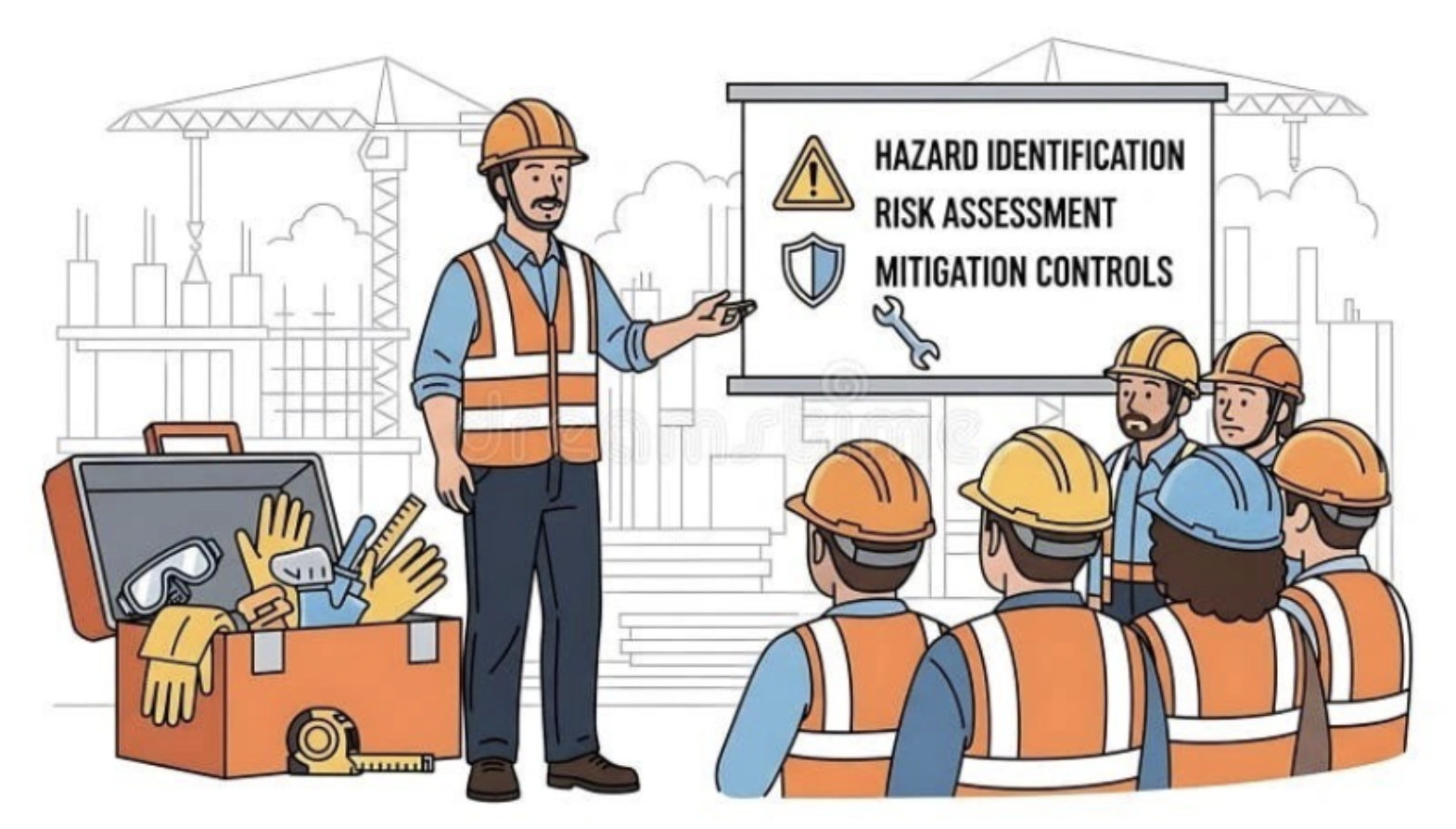
Start by thoroughly analysing your project to pinpoint potential risks across all aspects: financial, operational, environmental, and regulatory.
Once risks are identified, assess their likelihood and potential impact using a risk matrix. This visual tool maps risks on a two-dimensional scale, plotting probability against severity.
Subsequently, prioritise risks based on their matrix placement, focusing resources on those in the high-likelihood, high-impact quadrant.
Afterwards, develop targeted mitigation strategies for each prioritised risk:
- Risk avoidance: changing plans to eliminate threats
- Risk transfer: sharing responsibility with subcontractors or insurers
- Risk reduction: implementing measures to lessen the likelihood or impact
- Risk acceptance: acknowledging minor risks with contingency plans
Above all, assign clear ownership for each risk, integrate mitigation actions into your project schedule, and establish regular reviews to monitor effectiveness.
Conclusion
The path toward superior risk management starts with acknowledging current gaps, implementing the missing elements highlighted in this article, and leveraging specialised technology designed specifically for construction risk challenges. When properly implemented with appropriate tools like those offered by Impress Solutions, your construction risk management plan transforms from a bureaucratic requirement into a powerful competitive advantage.
Get in touch with us now!









































.png)








.png)
.png)
.png)
.png)
.png)
.png)
.png)

.png)
.png)
.png)
.png)
.png)
.png)
.png)
.png)
.png)
.png)
.png)
.png)
.png)
.png)
.png)
.png)
.png)
.png)
.png)
.png)
.png)
.png)


Ready to Save Lives at Work?
With Impress Solutions, you’re not just getting a service, you’re securing peace of mind with a partner you can trust. Book a free consultation today, and let’s map out how we can help you save lives at work.

.png)