
How to Conduct JSA Safety Analysis: A Step-by-Step Guide to Controlling Workplace Hazards

Between 2003 and 2021, 4,306 Australian workers lost their lives in work-related incidents, and 82 workers were killed at work in 2023 alone. These numbers highlight why JSA safety matters.
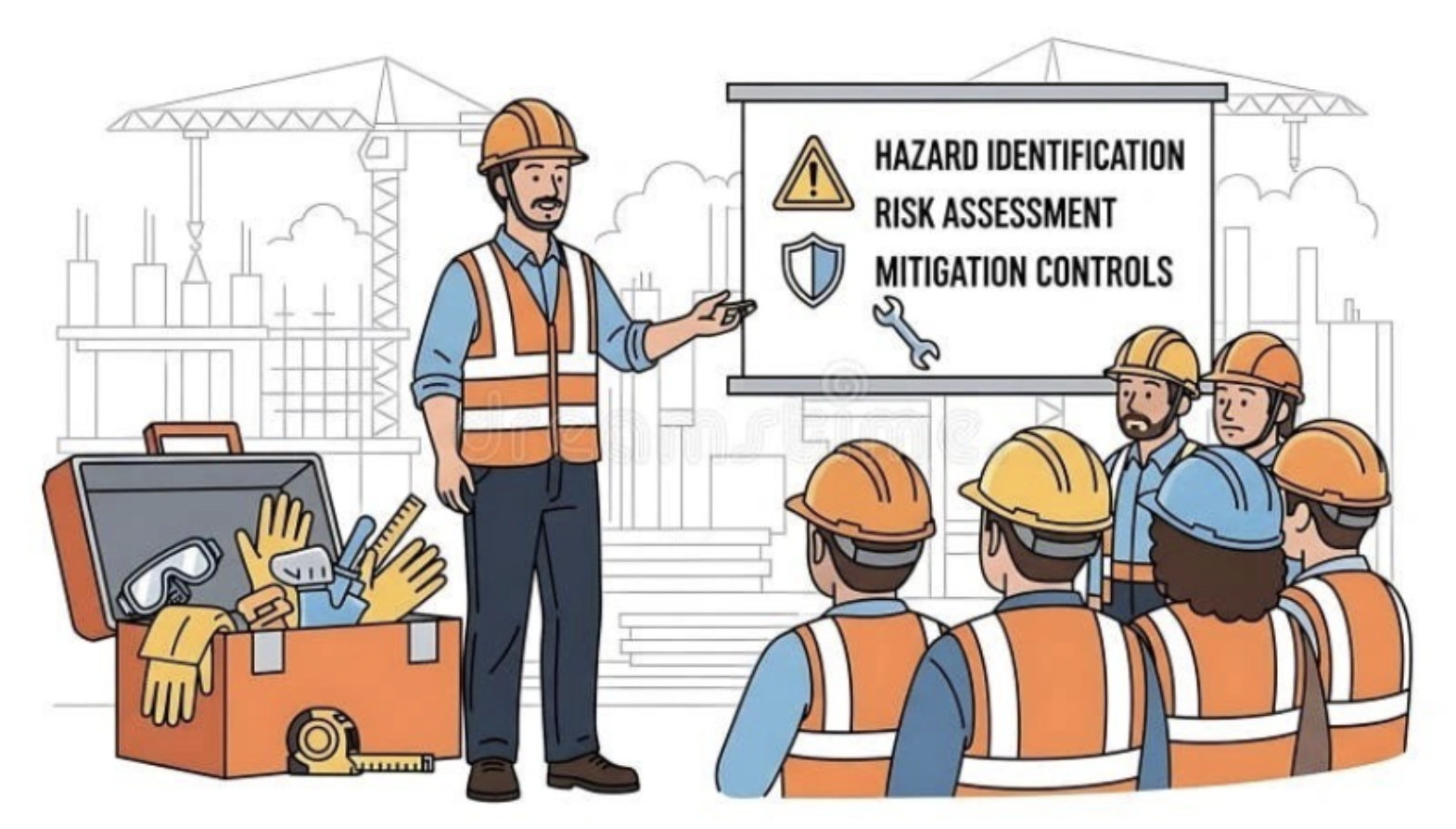
A job safety analysis (JSA) helps us identify and control workplace hazards before they cause injuries or fatalities. High-risk industries like construction and manufacturing face high accident potential. A well-laid-out JSA process is critical for these sectors.
In this piece, we'll walk you through what a JSA is and break down the jsa steps for conducting one. We'll show you job safety analysis examples, explain the purpose of a jsa, and help you implement an effective JSA program in your workplace.
What Is a JSA Safety Analysis and Why It Matters
Definition of Job Safety Analysis (JSA)
A job safety analysis breaks down each job into simple steps. This helps identify hazards and determine control measures you need [1]. The methodology explores specific work assignments like operating machinery, handling chemicals, or performing maintenance tasks. It recommends the safest way to complete the job [1].
The terms 'job' and 'task' refer to specific work assignments. You can divide them further into smaller steps [1]. Jobs defined too broadly, such as 'overhauling an engine,' or too narrowly, such as 'positioning car jack,' are not suitable for JSA [1]. The analysis requires you to identify what could go wrong at each step. You then apply controls that reduce the risk [2].
The Purpose of a JSA in Workplace Safety
JSA serves multiple functions beyond simple hazard identification. The analysis process identifies hazards that went undetected before. Job knowledge among participants increases [1]. Safety and health awareness rises. Communication between workers and supervisors improves, and acceptance of safe work procedures strengthens [1].
The documentation can be the foundation for regular contact between supervisors and workers. It serves as a teaching tool for job training and acts as a briefing guide for infrequent jobs [1]. JSA also assists in completing detailed incident investigations [1]. Observing workers perform tasks provides a major advantage. It does not rely on individual memory and prompts recognition of hazards [1].
Difference Between JSA and JHA
JSA stands for Job Safety Analysis while JHA stands for Job Hazard Analysis. Both processes are similar in their objectives and methodology [3]. Most safety professionals use these terms interchangeably. They describe techniques to improve worker safety when completing hazardous tasks [3]. Both contain the same three specific components: exploring the steps that make up a job, identifying hazards at each step, and finding safety measures to avoid risks [3].
When and Where JSAs Are Required
JSA becomes necessary when work has no formal procedure, presents high risks, or involves conditions where errors could lead to harm [2]. A JSA should be developed for jobs with high injury rates, potential to cause severe injuries, recent process changes, or new tasks and machinery. You also need it for tasks performed irregularly [4]. The requirement may also be identified through reported hazards or incidents with root causes relating to lack of procedure. Completed risk assessments, legislative requirements, or work group requests can also trigger the need [5].
The 4 Steps of Conducting a Job Safety Analysis
A job safety analysis follows a systematic four-step approach that transforms workplace safety from reactive to proactive.
Step 1: Select and Prioritize Jobs for Analysis
Not all jobs need analysis right away. Start with tasks that have high illness or incident rates, or where past injuries suggest the greatest risk [3]. Jobs where simple human error could cause catastrophic consequences demand priority attention [3].
New jobs or processes modified in recent months need analysis because workers lack experience and hazards may not be evident [1]. Jobs performed infrequently present greater risk since staff members don't anticipate which hazards to expect [2]. Complex jobs that need detailed written instructions also warrant a full review [3].
Step 2: Break Down the Job into Specific Tasks
Select a job and break it into a sequence of smaller tasks and steps [3]. The sequence should include every task needed to complete the job from start to finish [1]. Most jobs can be described in less than ten steps [1]. If your sequence grows beyond this, think about dividing the job into two separate analyzes [3].
Avoid making steps too general or too detailed [1]. Steps that are out of order may cause you to miss potential hazards or introduce hazards that don't exist [1].
Step 3: Identify Hazards and Assess Risk for Each Task
Review each job task and write down existing and potential hazards that arise in each step [4]. Identify hazards by observing the job, reviewing past incident investigations and talking with experienced workers [2].
Use a risk matrix together with an assessment of consequences and likelihood to evaluate each hazard [4]. This determines the original risk rating before applying control measures [6].
Step 4: Develop and Implement Control Measures
Apply the hierarchy of controls to address identified hazards [1]. Eliminating the hazard is the most effective measure [1]. When elimination isn't possible, substitute with less hazardous alternatives, implement engineering controls like guard rails, use administrative controls such as job rotation and provide personal protective equipment as a final resort [3][4].
Understanding the JSA Form and Documentation
Documentation transforms job safety analysis from concept into action. A well-laid-out JSA form captures critical information that workers need to perform tasks safely.
Key Components of a JSA Form
A practical JSA document has several sections. Job information comes first: job title, location, department, date of analysis, and names of those preparing or reviewing the document. Job steps follow and break work into logical sequences such as "set up ladder" or "collect tools". Hazards identification captures potential risks like slips, manual handling strains, falling objects, and chemical exposure. Risk controls list appropriate measures, from engineering controls like machine guards to administrative controls and personal protective equipment. The final section contains signatures of supervisors or safety officers who confirm review and acceptance.
How to Fill Out a JSA Template
Start by adding job details and participants' names. Break the work into 5-10 simple steps. Too much detail overwhelms while too little overlooks critical hazards. For each step, identify what could go wrong by asking if workers could be struck, caught, or exposed to harmful substances. Use the hierarchy of controls and choose the most effective measure you have. Document everything so any worker can follow the procedure.
Job Safety Analysis Examples
Construction tasks like changing light fixtures on ladders need controls such as anti-slip feet and maintaining three points of contact. Hospitality spill cleanup requires clear signage and proper spill kits. Office mail handling needs correct lifting techniques and clear walkways. Retail stock replenishment requires manual handling training and adequate lighting.
Reviewing and Approving the Completed JSA
Involve employees who perform the task daily. They often learn about hidden hazards and practical solutions better than anyone. Management should authorize the JSA once reviewed and communicate it to all relevant personnel. Copies must be accessible at the worksite, not gathering dust on shelves.
Implementing and Maintaining Your JSA Program
Creating a JSA form is only half the battle. The true value emerges through proper implementation and continuous improvement.
Training Workers Using JSA Documentation
Use the completed JSA to train employees on safe work practices [7]. Workers must understand how to follow the JSA and implement safety measures at each step [5]. Training programs should address the goals and objectives of JSA. They teach workers to identify hazards, assess risks, and implement control measures [8]. Hands-on training sessions or simulations boost understanding and allow employees to practice JSA in scenarios relevant to their job roles [8].
Conducting Regular Reviews and Updates
Jobs change over time with new equipment, processes, or personnel [5]. JSAs become ineffective if you fail to update them [9]. Involve workers in reviewing and updating documentation. They provide valuable input based on firsthand experience [5]. Schedule regular audits to verify that task descriptions are detailed enough, review dates are current, and team members can perform mitigation steps [10].
Integrating JSAs with Overall Safety Management
Line up JSA procedures with existing safety policies rather than treating them as separate activities [8]. Digital platforms can total data from incident reports, training records, and safety audits. This creates a detailed overview of safety performance [8].
Common Mistakes to Avoid
The process gets rushed and leads to incomplete information and overlooked hazards [5]. You miss critical risks when you exclude workers who perform tasks daily [9]. JSA becomes a checkbox activity for compliance rather than a key safety component, and this compromises effectiveness [9].
Conclusion
You now have a complete framework to implement JSA safety analysis in your workplace. Follow the four systematic steps and involve your workers throughout the process. Document everything clearly. Treat JSA as an ongoing dedication rather than a one-time exercise—this matters most. Review and update your analyzes regularly as jobs evolve. Consistent application of these principles will help you identify hazards before they cause harm and create a safer work environment for everyone.
References
[1] - https://www.ccohs.ca/oshanswers/hsprograms/job-haz.html
[2] - https://www.vectorsolutions.com/resources/blogs/a-breakdown-of-the-4-steps-of-a-job-safety-analysis/
[3] - https://alertforce.com.au/risk-management-six-steps-to-completing-an-effective-job-safety-analysis/
[4] - https://www.enviroessentials.com.au/blog/2023/08/conducting-a-job-safety-analysis/
[6] - https://tistraining.com/tips-for-writing-a-job-safety-analysis/
[7] - https://www.ohsconsulting.com.au/training-job-safety-analysis
[8] - https://sbnsoftware.com/blog/how-can-jsa-be-integrated-with-other-safety-management-systems/
[9] - https://sbnsoftware.com/blog/what-are-common-mistakes-to-avoid-during-a-jsa/













































.png)











.png)
.png)
.png)
.png)
.png)
.png)
.png)

.png)
.png)
.png)
.png)
.png)
.png)
.png)
.png)
.png)
.png)
.png)
.png)
.png)
.png)
.png)
.png)
.png)


Ready to Save Lives at Work?
With Impress Solutions, you’re not just getting a service, you’re securing peace of mind with a partner you can trust. Book a free consultation today, and let’s map out how we can help you save lives at work.

.png)