
Culture Safety in the Workplace: Your Essential Guide to Building a Strong Foundation

Culture safety in the workplace has never been more critical. Workplace injuries cost Australian businesses over $61.8 billion each year[24], and organizations with strong safety leadership report up to 70% fewer safety incidents[24]. The UK saw 1.8 million workers suffer from work-related ill health in 2022-23. The estimated economic cost reached £20.7 billion[25]. These figures reveal the importance of safety culture in the workplace and why building a positive safety culture matters for every organization.
This piece will walk you through what defines a strong safety culture and why it matters for your business and employees. You'll learn how to build a safety culture in the workplace that protects lives and creates lasting value.
What Is Safety Culture in the Workplace
Defining workplace safety culture
Safety culture represents the collective values, attitudes and behaviors that shape how your organization approaches worker well-being and risk management. It's the sum of what your organization is and does in the interests of safety[1].
The 1993 ACSNI Human Factors Study Group defined it as the product of individual and group values, attitudes, perceptions, competencies and patterns of behavior that determine the commitment to, and the style and proficiency of, an organization's health and safety management system[2]. This definition reveals three core components: psychological (shared values and beliefs), behavioral (day-to-day safety methods) and situational (policies, procedures and organizational structures)[2].
Your workplace culture can be understood as "the way we do things around here"[26]. Safety culture forms a subset of this broader organizational culture and influences human behavior and performance at work just as substantially as any safety management system[26].
Key characteristics of a strong safety culture
Strong safety cultures share distinct attributes that set them apart. Leadership commitment stands as the foundation and requires visible and active participation from senior management in safety practices[2]. This felt leadership separates strong safety cultures from weak ones and proves three times more effective in achieving safety excellence[27].
Effective communication creates the backbone of safety culture[4]. Open dialog ensures everyone feels comfortable reporting errors or suggesting improvements without fear of reprisal. Workers who feel their voices matter become stakeholders in their colleagues' well-being, from reporting hazards to engaging in safety committees[4].
A non-punitive response to errors marks another defining characteristic[4]. Mistakes become opportunities to learn rather than occasions for punishment. This approach encourages employees to report incidents and near misses without fear.
Strong safety cultures also maintain a constant focus on improvement and learning[2]. Organizations evolve their practices and anticipate unsafe actions, correcting them before harm occurs[28].
The difference between positive and negative safety culture
Positive safety cultures take a proactive approach to addressing safety issues. Negative cultures remain reactive and only respond after accidents occur[29]. This fundamental difference determines whether your organization prevents incidents or simply responds to them.
Safety cultures progress through five development levels: Pathological, Reactive, Calculative, Proactive and Generative[2]. Pathological cultures show no concern about violating safety rules among employers and workers. Reactive cultures treat safety as important only after accidents. Calculative cultures implement systems to manage hazards. Proactive cultures anticipate and avoid problems before they occur. Generative cultures embed safety into every aspect of thinking and working[2].
Negative safety cultures often pressure workers to bend or break safety rules to meet deadlines or production goals[30]. Positive cultures ensure nothing takes precedence over safe work under any circumstances[30].
Why Safety Culture Matters: The Business and Human Case
Protecting lives and preventing injuries
Up to three million people suffer from workplace injuries and illnesses each year[31]. Canada alone documented 993 workplace fatalities in 2022[5]. These aren't just statistics. Each number represents someone's colleague, family member, or friend. Every employee deserves to return home safe at the end of their shift. A positive safety culture in the workplace reduces these preventable tragedies by a lot and creates environments where workers operate with confidence[31].
Reducing costs and improving productivity
Preventable injuries cost the Canadian economy $44.95 billion in a single year[5]. Workplace injury costs exceed $91.74 billion each year in Australia[6]. US employers spend $1.53 billion weekly on direct workers' compensation costs alone[7]. Businesses face medical treatment expenses, rehabilitation costs, and compensation for lost wages when an employee gets injured[32]. These claims drive up workers' compensation insurance premiums over time and higher long-term costs follow[32].
Productivity often grinds to a halt following injuries. Temporary shutdowns for investigations, task reallocation to other workers, and disrupted workflows jeopardize deadlines[32]. So companies with strong safety cultures report fewer workplace accidents by a lot and reduce workers' compensation claims and downtime[8].
Building trust and employee morale
Workers who feel safe in their surroundings go about their day with more confidence and contribute more to operations that run smoothly[31]. A workplace with a poor safety record tends to have higher turnover rates. Employees are less likely to stay where they feel unsafe[32]. This drives up hiring and training costs. So organizations that demonstrate commitment to workforce health and safety attract top talent and retain them[31].
Legal compliance and reputation management
Businesses face regulatory fines for failing to comply with safety standards set by agencies like OSHA[32]. Accidents can harm your brand's image, especially if they lead to media coverage or legal action[32]. Prospective clients, customers, and employees may think twice about associating with a company that doesn't prioritize safety[32].
How to Build a Strong Safety Culture in Your Workplace
Building a safety culture in the workplace requires action on multiple fronts. Here's how to create lasting change.
Leadership commitment and visible safety behaviors
Leaders shape culture through their actions. Senior management demonstrates genuine commitment when they participate in safety walks, attend toolbox meetings and involve workers on the ground[9]. Visible leaders lead by example and show the values and behaviors they expect from their people[10].
Clear safety policies and procedures
Your policy puts your commitment to preventing work-related injury and illness on paper[11]. Document safety protocols and make them available. Involve workers in developing procedures so they become a shared commitment[11]. Review policies at least once annually to keep them relevant[11].
Open communication channels
Two-way communication builds trust and makes it possible for workers to report concerns without fear[12]. Morning meetings, toolbox discussions and safety walks stimulate conversations and contribute to openness within your organization[13]. Anonymous reporting systems make it easier for employees to raise issues they might be uncomfortable addressing face to face[14].
Meaningful and regular safety training
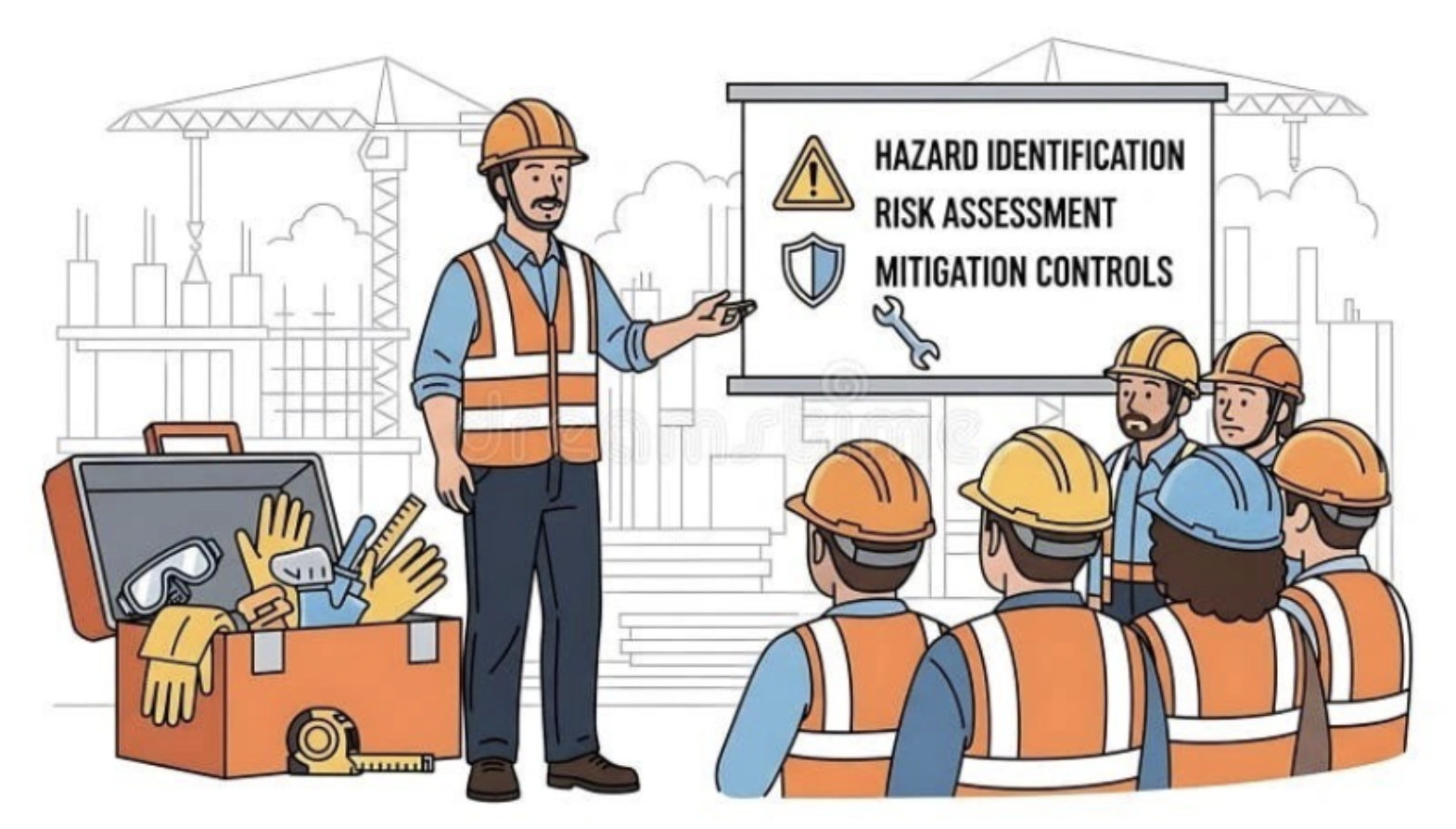
Training gives workers the knowledge and skills to identify hazards and work safely[15]. Accommodate different learning styles through visual, auditory and hands-on methods[16]. Provide ongoing training rather than one-time events and update content when workplace changes occur[15].
Consistent enforcement of safety rules
Compliance responses should be proportionate to the seriousness of conduct[17]. Regulators think over the extent of risk, culpability and the duty holder's compliance history when they determine appropriate enforcement[17]. Consistent application of consequences demonstrates that safety rules matter.
Lessons from incidents and near-misses
Research shows that between 10 and 100 near-miss incidents are associated with every injury reported[18]. Near misses serve as leading indicators and provide opportunities to improve safety without experiencing actual incidents[18]. Establish definitions for near-miss events, encourage reporting without punitive measures and provide timely feedback on corrective actions taken[19].
Common Challenges and How to Overcome Them
You can address obstacles to building a safety culture in the workplace if you recognize them early.
Signs of a weak safety culture
Leadership sends inconsistent messages that signal safety isn't a priority[20]. Management fails to emphasize safety, and workers receive mixed messages about its importance. The organization invests little in safety training, equipment and personnel. This reflects a lack of commitment from the top[20].
Hazard and incident reporting systems that don't work indicate poor safety culture[20]. Workers report concerns but receive no feedback or see no corrective actions. Apathy and disengagement follow[20]. A blame culture proves harmful because individuals get blamed for incidents rather than addressing problems that are systemic[20]. High accident rates point to problems that require attention[20].
Employee resistance to safety initiatives
Resistance represents a natural human reaction to change[3]. Employees resist because they're unprepared, fear potential failures, or lack confidence in management[21]. Anxiety stems from fear of job loss or compensation changes[3]. Leaders who appear disengaged or resistant send mixed messages[3].
You can address resistance by explaining changes and the risk of inaction[3]. Communication about how changes affect roles reduces fears[3]. Leadership that is engaged and visible inspires confidence[3].
The gap between policy and practice
Work-as-imagined lives in procedures and policies. Work-as-done reflects actual frontline reality[22]. Workers adapt to dynamic conditions, weather, time pressure and equipment troubles[22]. People who don't do the job build procedures[22]. Observe work with curiosity and involve frontline workers in updating documents. Ask if paperwork helps people work safely[22].
External workers and your safety culture
Contractors arrive with different safety cultures and may take shortcuts[23]. Ensure contractors prove an effective safety management system and deliver safety inductions. Establish monitoring systems and ensure all parties understand workplace control[23].
Conclusion
A strong safety culture protects your employees and strengthens your bottom line. You create workplaces where people thrive and businesses succeed by prioritizing safety through committed leadership and clear communication.
Assess where your organization stands today first. Identify gaps, involve your workers in the solution and take action. A safety culture takes time to build, but the results show through fewer incidents, reduced costs and teams that trust you have their backs.
References
[1] - https://www.cdc.gov/niosh/learning/safetyculturehc/module-1/4.html
[2] - https://www.sciencedirect.com/topics/social-sciences/safety-culture
[3] - https://www.prosci.com/managing-change-resistance
[5] - https://www.canadasafetytraining.com/Safety_Blog/building-a-safety-culture.aspx
[6] - https://laamp.com.au/blog/why-safety-culture-beats-safety-rules
[8] - https://home.sentryroad.com/blog/safety-culture-workplace-compliance
[9] - https://www.safeworkaustralia.gov.au/safety-topic/managing-health-and-safety/leadership-and-culture
[13] - https://pmc.ncbi.nlm.nih.gov/articles/PMC10442955/
[14] - https://shec.co.uk/improving-workplace-safety-with-better-communication-strategies
[15] - http://www.osha.gov/safety-management/education-training
[16] - https://www.concentra.com/resource-center/articles/the-keys-to-an-effective-safety-training
[18] - https://pmc.ncbi.nlm.nih.gov/articles/PMC7458492/
[20] - https://www.australianworkplacesafety.com.au/key-indicators-of-a-poor-workplace-safety-culture/
[21] - https://pmc.ncbi.nlm.nih.gov/articles/PMC9091473/
[23] - https://quartexsoftware.com/blog/promoting-your-safety-culture-how-to-get-your-contractors-on-board/
[24] - https://youthsafe.org/building-a-workplace-safety-culture/
[25] - https://aureolglobalconnections.com/workplace-safety-culture/
[26] - https://www.hse.gov.uk/humanfactors/topics/culture.htm
[27] - https://www.cority.com/blog/essential-strong-safety-culture/
[30] - https://blog.predictivesafety.com/safety-culture
[31] - https://safetyculture.com/topics/culture-of-safety







































.png)










.png)
.png)
.png)
.png)
.png)
.png)
.png)

.png)
.png)
.png)
.png)
.png)
.png)
.png)
.png)
.png)
.png)
.png)
.png)
.png)
.png)
.png)
.png)
.png)
.png)
.png)
.png)


Ready to Save Lives at Work?
With Impress Solutions, you’re not just getting a service, you’re securing peace of mind with a partner you can trust. Book a free consultation today, and let’s map out how we can help you save lives at work.

.png)