Hazard Identification and Control: The Complete Guide to Workplace Safety
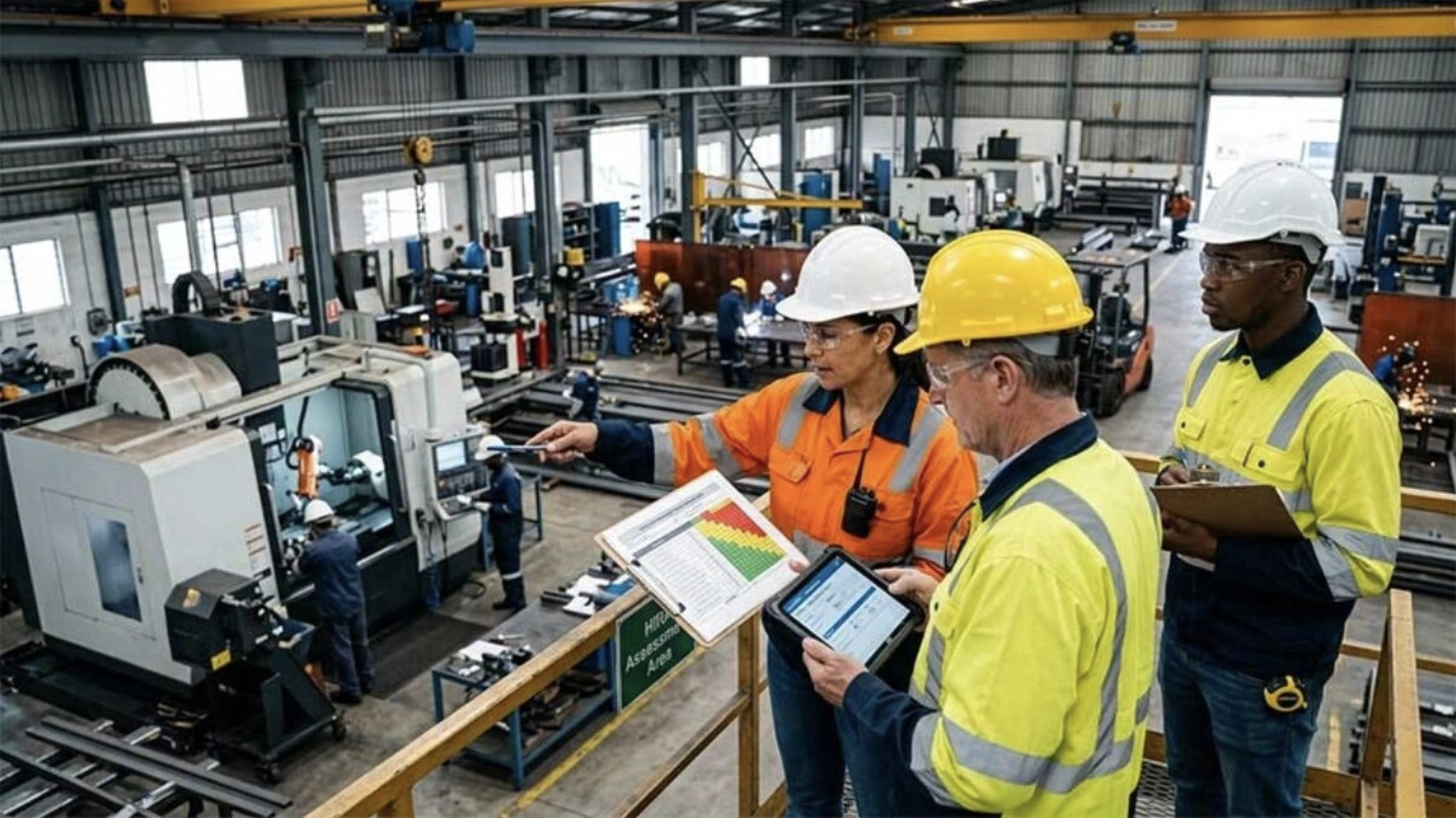
Every workplace contains potential hazards, but here's what separates safe organizations from those dealing with preventable injuries: effective hazard identification.
A hazard is anything that could hurt you or someone else[1]. Eliminating and controlling these risks can prevent workplace injuries and improve worker wellbeing in reality[3]. Employers have a legal duty to minimize these risks[6], and getting rid of hazards altogether is the best approach[1].
We'll walk you through what hazard identification means in this piece. You'll learn the difference between hazards and risks and the complete process of hazard identification and risk assessment. You'll learn practical ways to identify hazards in your workplace and find how to control them using proven methods. Let's get started!
Understanding Hazards and Risks in the Workplace
Most people use the terms "hazard" and "risk" interchangeably, but understanding the difference between hazard and risk are the foundations of effective workplace safety. A hazard is anything that could hurt you or someone else[1]. Think of frayed electrical cords that could cause shock, boxes stacked precariously that might fall, or noisy machinery that could damage hearing[1]. A hazard represents the source of harm in other words.
Risk measures something different. You work out how likely it is that a hazard will harm someone and how serious the harm could be when you assess the risk[1]. Ask yourself two questions at the time you spot a hazard: how likely is it that the hazard could harm me or someone else, and how badly could I or someone else be harmed[1]? Risk depends on exposure and what it all means[2].
Workplace hazards fall into several categories. Physical hazards include unguarded machinery, noise, or slippery surfaces[2]. Chemical hazards involve solvents, fumes, or hazardous dust[2]. Biological hazards cover viruses, bacteria, or mold[2]. Ergonomic hazards relate to forceful, repetitive, or awkward work[2]. Psychosocial hazards include poor support, bullying, or low role clarity[2]. You take the first step in what is hazard identification and the broader process of hazard identification and risk assessment when you identify these hazards.
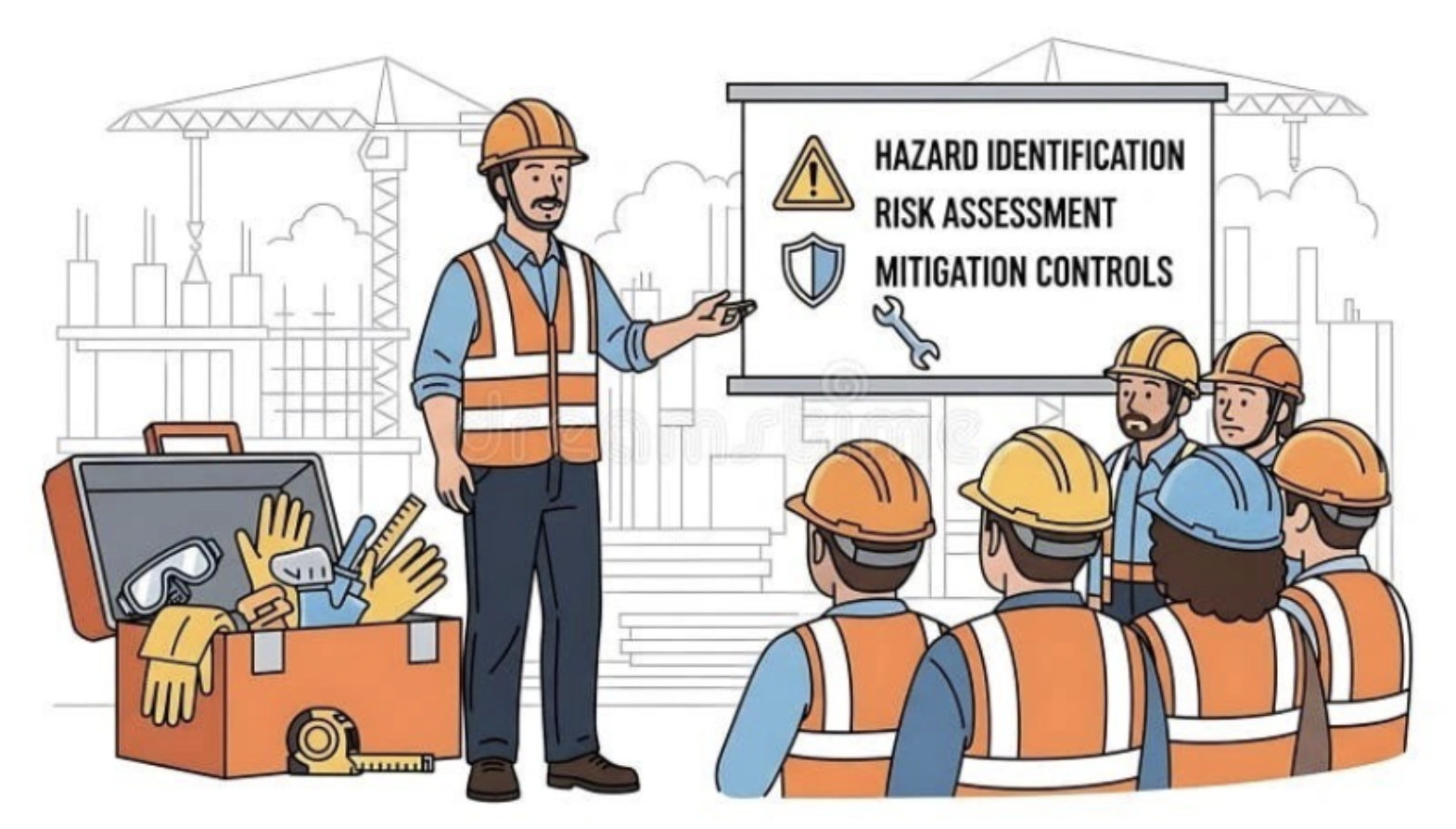
The 4-Step Process for Hazard Identification and Risk Assessment
Managing workplace safety follows a systematic approach. You must manage work health and safety risks if you are a person conducting a business or undertaking, designer, manufacturer, importer, supplier, installer, or officer such as a company director[3]. Four distinct steps work together to protect workers in this process.
Step 1: Identify Hazards
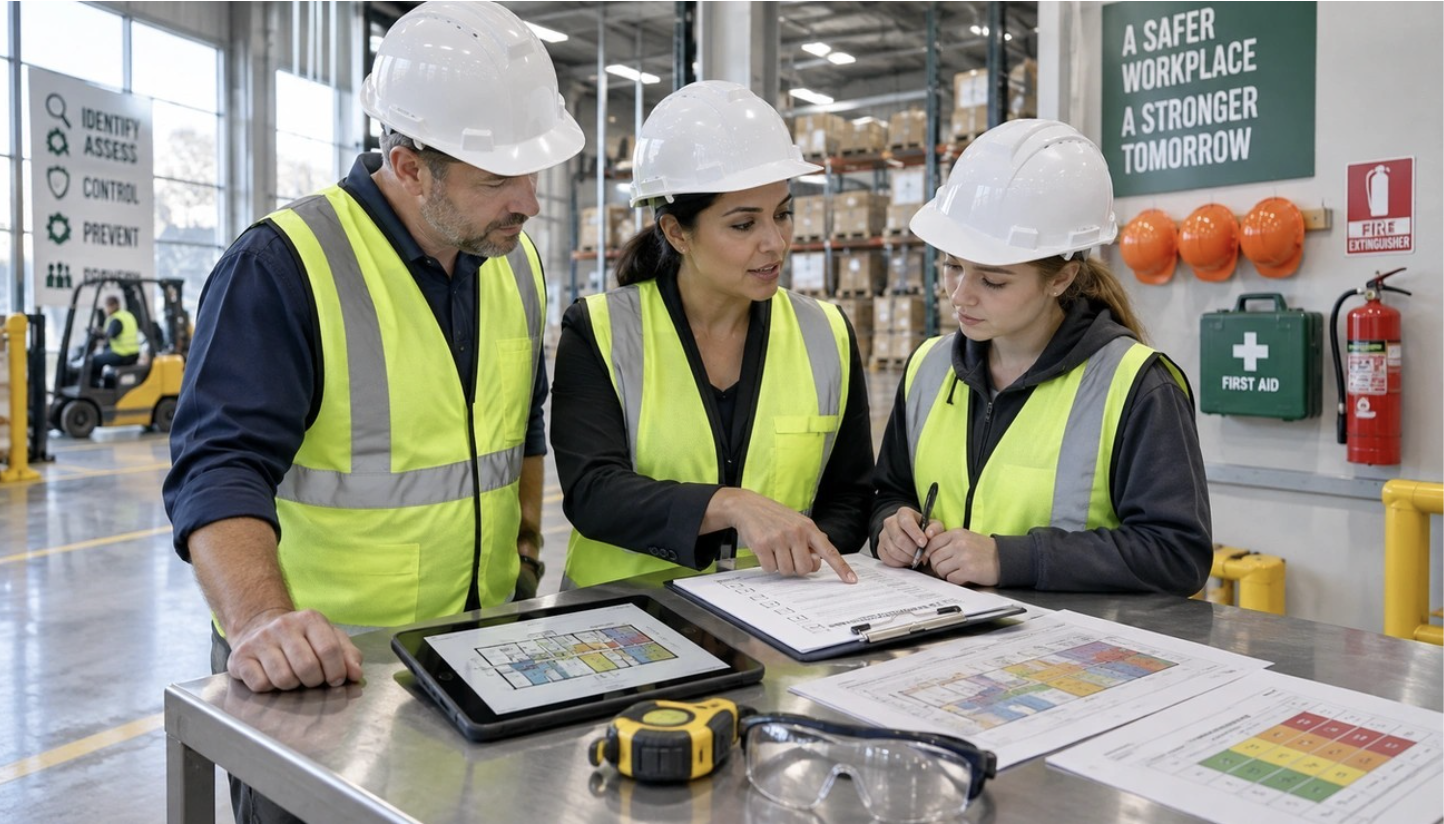
Find out what could cause harm in your workplace. Collect and review information about hazards present or that may appear[4]. Workplace inspections should be conducted at the start and at regular intervals to identify new or recurring hazards[4]. Break down injuries, illnesses, incidents and close calls to determine hazards and their mechanisms[4]. Group similar incidents. Identify trends in injuries, illnesses and hazards reported[4]. Think over hazards associated with emergency or nonroutine situations[4].
Step 2: Assess Risks
Determine the severity and likelihood of incidents that could result from each hazard identified. Use this information to prioritize corrective actions[4]. Assess each hazard by thinking over the severity of potential outcomes, the likelihood that an event or exposure will occur, and the number of workers who might be exposed[4].
Step 3: Control Risks
The most effective control measures should be implemented to eliminate or minimize risks.
Step 4: Review Control Measures
Your controls must work as planned and remain effective over time.
How to Control Hazards Using the Hierarchy of Controls
Once you've identified hazards, you need a systematic approach to control them. The hierarchy of controls provides a framework that ranks control measures from most effective to least effective. This hierarchy helps you select solutions that provide maximum protection without relying on worker behavior alone.
The hierarchy consists of five levels. Elimination removes the hazard from your workplace. Substitution replaces the hazard with something safer. Engineering controls isolate people from hazards through physical means. Administrative controls change how people work to reduce exposure. Personal protective equipment protects workers with gear like gloves or respirators.
Elimination and substitution stand at the top because they control exposures without most important human interaction. Engineering controls reduce worker exposures by 79% for occupational asthma and 52% for occupational dermatitis[5]. These controls also save employers an average of $41,282.74 per injury case[5]. Then, engineering controls prove more reliable than methods that depend on human behavior.
Administrative controls and PPE rank lowest because they don't stop hazards at the source. They rely on worker compliance and supervision. You should use PPE only after higher-level controls have been implemented or when other options aren't available. You implement the most effective solutions first when you start at the top of the hierarchy and work down.
Conclusion
You now have the complete framework to identify and control hazards in your workplace. Understanding the difference between hazards and risks, using the 4-step process and applying the hierarchy of controls will substantially reduce workplace injuries and create a safer environment for everyone.
Start by identifying hazards in your workplace today. Assess the risks and implement controls starting from the top of the hierarchy. Review your measures regularly. Your efforts will protect lives and build a safe workplace culture.
References
[4] - http://www.osha.gov/safety-management/hazard-identification









































.png)





.png)
.png)
.png)
.png)
.png)
.png)
.png)

.png)
.png)
.png)
.png)
.png)
.png)
.png)
.png)
.png)
.png)
.png)
.png)
.png)
.png)
.png)


Ready to Save Lives at Work?
With Impress Solutions, you’re not just getting a service, you’re securing peace of mind with a partner you can trust. Book a free consultation today, and let’s map out how we can help you save lives at work.

.png)