
What is FMEA? Understanding Failure Mode Effects Analysis and How to Apply It

What is FMEA and Why It Matters
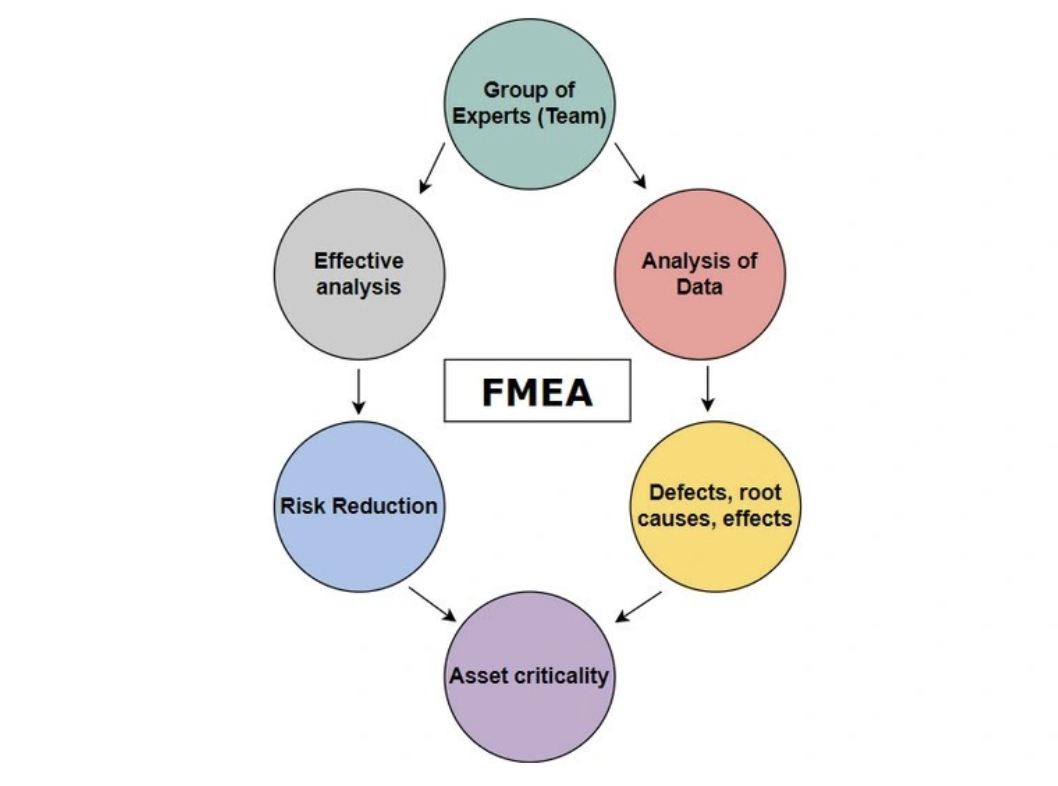
Failure Mode and Effects Analysis (FMEA) is a structured methodology that identifies potential failure modes within systems, processes, or products and then reviews their effects on operations. Reliability engineers developed this analytical method in the late 1950s to study military system malfunctions[1]. It gets into individual components to determine how each could fail and the resulting effect on system stability[2].
Cross-functional teams assess risks using three key factors in this approach: Severity (the failure's effect), Occurrence (likelihood of the failure happening), and Detection (knowing how to catch the failure before it causes issues)[9]. These factors combine to produce a Risk Priority Number (RPN), calculated as S × O × D[9]. This helps prioritize where to focus improvement efforts.
Teams use FMEA when designing, redesigning, or reviewing processes, products, or services[4]. They apply it after quality function deployment and before developing control plans for modified processes. It also works when planning improvement goals or analyzing existing failures[4]. Industries including automotive, aerospace, healthcare, manufacturing, semiconductor processing, food service, and software rely on this method[1][10].
The methodology does have limitations. The standardized format can prove inefficient. Lack of ROI assessment amplifies deficiencies, and insufficient data makes three-dimensional risk assessment unreliable[4]. Despite these challenges, FMEA works for identifying and mitigating potential risks. This leads to improved reliability, safety, and quality[4].
Types of FMEA Analysis Methods
Organizations apply FMEA at different levels depending on what requires assessment. FMEA is broadly divided into design and process approaches, depending on whether it targets a system or product design versus a process or workflow.
Design FMEA (DFMEA) gets into product design risks before production begins. This analysis identifies design-related failures during the product development phase and focuses on component selection, material choices, dimensional requirements, geometric tolerances, interfaces, and operating conditions. DFMEA helps product teams understand failure modes early so they can be designed out, with effects alleviated through design elements, detection methods, or operational support concepts. The main goal is detecting failures that affect reliability or safety before going to production.
Process FMEA (PFMEA) focuses on manufacturing and assembly processes. DFMEA gets into design intent, while PFMEA assesses how the manufacturing process could introduce defects or variation. It reviews process steps, assembly sequence, operator inputs, tooling, fixtures, equipment, work instructions, inspection points, and process controls. PFMEA assumes design failures have already been thought over and concentrates on production-related issues.
System FMEA (SFMEA) assesses the product or equipment platform at the system level. System FMEA gets into how major functions, subsystems, interfaces, controls, and operating conditions interact instead of focusing on individual parts. Keep in mind that 50% or more of system problems occur at interfaces between subsystems or components.
Software FMEA addresses software-related defects, errors, and vulnerabilities that may compromise system functionality, data integrity, or security.
How to Apply FMEA: Step-by-Step Implementation Guide
FMEA implementation begins with assembling a cross-functional team. The team represents design, manufacturing, quality, and other relevant departments[3]. This multidisciplinary approach brings diverse knowledge about the process, product, or service under analysis.
The team then defines the scope: determining whether the analysis targets concept, system, design, process, or service[3]. Flowcharts help identify boundaries and ensure every team member understands what falls within the analysis parameters. Functions are identified next using verb-noun format to describe what the system, design, or process should accomplish[3].
The team brainstorms potential failure modes for each function. They ask how each function could fail to meet requirements[3]. This represents the central FMEA activity. Each failure mode receives an analysis of its effects on the system, related processes, customers, or regulatory compliance[3].
Severity ratings follow and are scored from 1 (insignificant) to 10 (catastrophic)[3]. Only the highest severity rating is recorded when a failure mode has multiple effects[3]. Root causes are then determined for each failure mode. The team documents prevention controls already in place and assigns occurrence ratings from 1 to 10[5]. Detection controls are reviewed next and receive detection ratings that reflect how likely the failure will be caught before reaching customers.
The Risk Priority Number multiplies Severity × Occurrence × Detection[6]. This produces values from 1 to 1,000 that prioritize corrective actions. Teams re-rank the ratings after implementing improvements to confirm risk reduction[5].
Conclusion
FMEA gives your team the ability to move from reactive firefighting to proactive risk management. The methodology identifies potential failures and reviews their effect through Severity, Occurrence, and Detection ratings. It then prioritizes corrective actions using Risk Priority Numbers. Design, Process, or System FMEA all use a cross-functional approach that catches defects early when fixes remain inexpensive. You protect your organization's resources and reputation while building more reliable products and processes. Customer safety improves as a result.
References
[1] - https://en.wikipedia.org/wiki/Failure_mode_and_effects_analysis
[2] - https://pmc.ncbi.nlm.nih.gov/articles/PMC10229026/
[5] - https://quality-one.com/fmea/
[6] - https://www.apisnorthamerica.com/fmea-severity-ranking-a-complete-guide-for-risk-prioritization/
[7] - https://www.jamasoftware.com/blog/the-seven-steps-to-performing-fmea/
[8] - https://www.scrut.io/post/guide-to-an-fmea-analysis
[9] - https://kaizen.com/insights/fmea-analysis-optimized-risk-management/














































.png)











.png)
.png)
.png)
.png)
.png)
.png)
.png)

.png)
.png)
.png)
.png)
.png)
.png)
.png)
.png)
.png)
.png)
.png)
.png)
.png)
.png)


Ready to Save Lives at Work?
With Impress Solutions, you’re not just getting a service, you’re securing peace of mind with a partner you can trust. Book a free consultation today, and let’s map out how we can help you save lives at work.

.png)