
Critical Risk Management Best Practices for Large Organisations.

A large mining organisation can have thousands of hazards across multiple sites. The harder question is knowing which controls must work every time because someone's life may depend on them.
As organisations grow, critical risk management becomes harder to keep consistent. Different sites operate in different conditions. Contractors change. Work practices evolve. A control that is clearly understood in one operation may be interpreted differently somewhere else.
The answer isn't another long list of controls. It is clarity about the risks that matter most, what prevents those risks from becoming serious events and how those controls are verified.
What are the best practices for critical risk management in large organisations?
The strongest programmes begin by identifying the material risks that could lead to fatal or life-altering consequences. They then build a clear line between the unwanted event and the controls that prevent it or reduce its consequences.
A Broad-Brush Risk Assessment (BBRA) helps provide that wider view. It brings together the critical risks across an operation before teams move into more detailed analysis.
For organisations operating in Queensland's mining sector, Recognised Standard 02 provides guidance on formal risk management practices used in developing and applying a mine safety and health management system.
From there, a bowtie can show how an unwanted event could occur, the threats that could lead to it, the preventive controls and the controls that reduce the consequences.
The sequence matters:
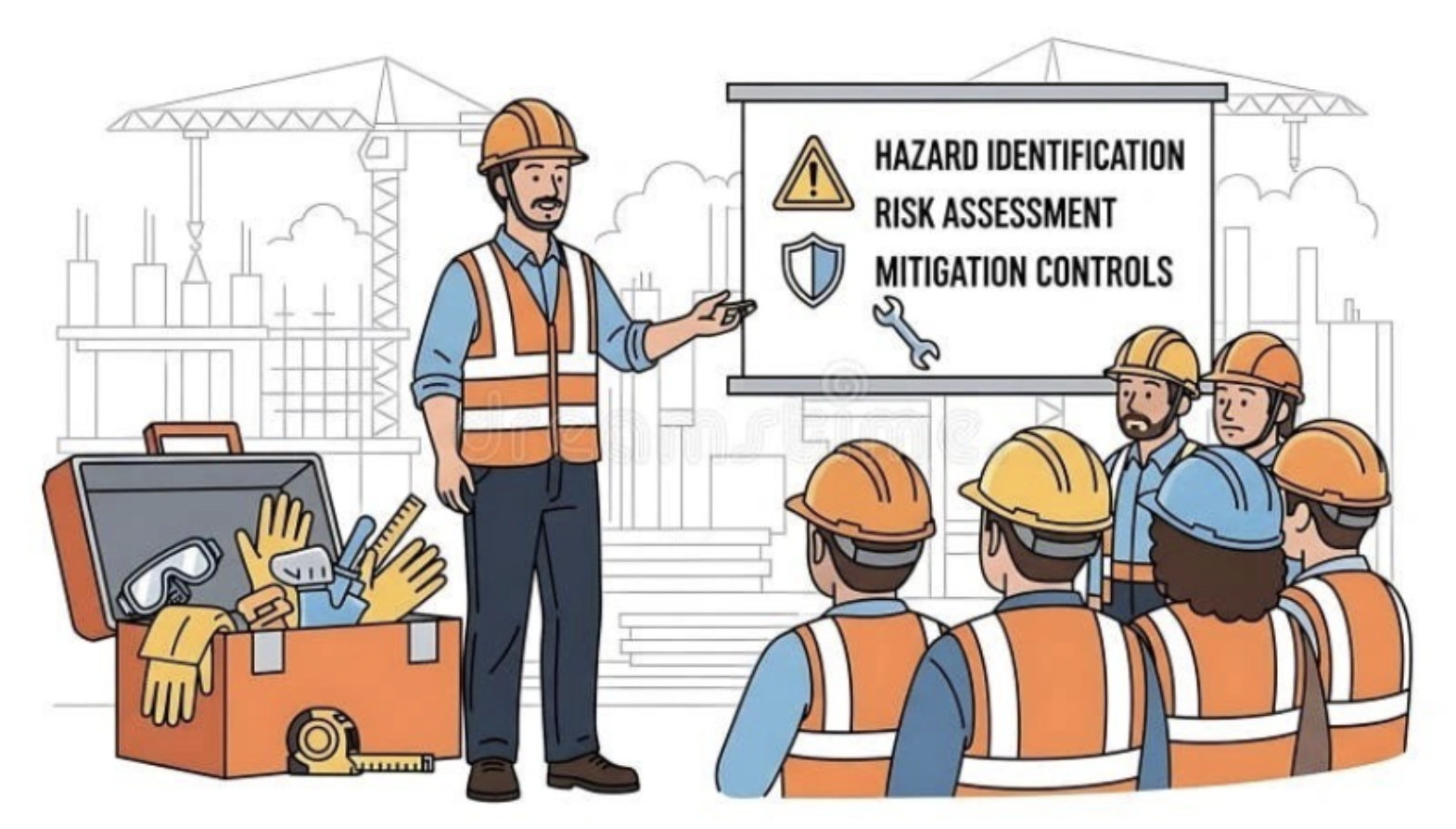
BBRA identifies the critical risks. Bowties examine the unwanted events and their controls. Critical controls are defined, performance standards are established and verification confirms whether those controls are working.
That gives a large organisation a common way to understand critical risk without assuming every site operates in exactly the same way.
Keep critical controls specific
Large organisations can quickly accumulate controls.
When everything is described as critical, attention becomes diluted.
A critical control needs a direct connection to the unwanted event. It should be Specific, Effective and Monitorable. People responsible for the control should understand what it must achieve, while those verifying it should know what evidence demonstrates that it is performing as intended.
Consider mobile equipment interaction. Telling workers to "follow the traffic management plan" provides limited assurance on its own.
A control such as physical separation between people and mobile equipment can be defined much more clearly. Its requirements can be understood, ownership assigned and performance checked in the field.
The question becomes practical: what must be true for this control to prevent the event?
Make performance standards useful
Critical Control Performance Standards (CCPS) provide that clarity.
A CCPS sets out what the control must do, who is accountable for it, what conditions need to be maintained and how its performance can be verified.
This becomes particularly important across large organisations. Different sites may have different equipment, layouts and operating conditions, but people still need a consistent understanding of what a critical control is expected to achieve.
The performance standard should support the work. It should not become another document that exists mainly to satisfy an audit.
Also Read: Hazard Meaning Explained: What Every Safety Professional Needs to Know

Verify what matters in the field
A bowtie can look right. A CCPS can be well written. A verification schedule can be complete.
None of those things proves that a critical control is working.
Verification needs to reach the field and test the control under the conditions where people are exposed to the risk. It should look for evidence, challenge assumptions and identify weaknesses before a serious event exposes them.
This is particularly important in large organisations. Verification results need to travel back into leadership discussions and operational decision-making. If information is collected but nobody acts on what it shows, the verification process becomes another reporting exercise.
Technology can help with that visibility. Digital verification, reporting and assurance tools can make information easier to collect and share across sites. But the technology should support the methodology, not become the methodology.
Keep people connected to the system
Critical risk management works best when it remains connected to the people doing the work.
Workers and supervisors see changes that may not appear in a bowtie or risk register. Equipment changes. Work areas change. Contractors introduce different interfaces. Conditions shift during a single task.
Those observations matter.
Regular conversations, field verification and feedback from workers help organisations understand whether critical controls remain suitable in practice. They also create opportunities to challenge assumptions before a control fails.
The purpose of the system is not to produce more information. It is to help people make better decisions when the consequences of getting them wrong are serious.
Conclusion
Large organisations do not need more complexity simply because they have more sites, people and activities. They need a consistent way to identify the risks that matter most and confidence that the controls protecting people continue to work.
Effective critical risk management creates that connection. It brings material risks into focus, defines what critical controls must achieve and verifies their performance where the work happens.
Impress Solutions helps mining, resources, energy and other high-hazard organisations strengthen critical risk management through BBRA, bowties, critical controls, performance standards and field verification.
Key Takeaways
- Start with material risks rather than treating every hazard as equally critical.
- Use BBRA and bowties to connect unwanted events with the controls that matter.
- Make critical controls Specific, Effective and Monitorable.
- Use CCPSs to define expectations and field verification to test performance.
- Bring worker observations and verification findings back into operational decisions.
Frequently Asked Questions
What are the best practices for critical risk management in large organisations?
Identify material risks, define critical controls, set clear performance standards, verify controls in the field and act on what the findings show.
Why is BBRA useful for large organisations?
It provides a broader view of material risks across an operation before detailed bowtie analysis and control definition.
What makes a critical control effective?
It should be Specific, Effective and Monitorable, with clear expectations for performance and verification.
Why is field verification important?
It provides evidence that critical controls are working as intended under real operating conditions.








































.png)









.png)
.png)
.png)
.png)
.png)
.png)
.png)

.png)
.png)
.png)
.png)
.png)
.png)
.png)
.png)
.png)
.png)
.png)
.png)
.png)
.png)
.png)
.png)
.png)
.png)
.png)
.png)
.png)
.png)
.png)


Ready to Save Lives at Work?
With Impress Solutions, you’re not just getting a service, you’re securing peace of mind with a partner you can trust. Book a free consultation today, and let’s map out how we can help you save lives at work.

.png)